Gelati Monastery
David the Builder's 12th-century monastery and academy above Kutaisi, a UNESCO site with a gold apse mosaic, royal frescoes and his tomb.
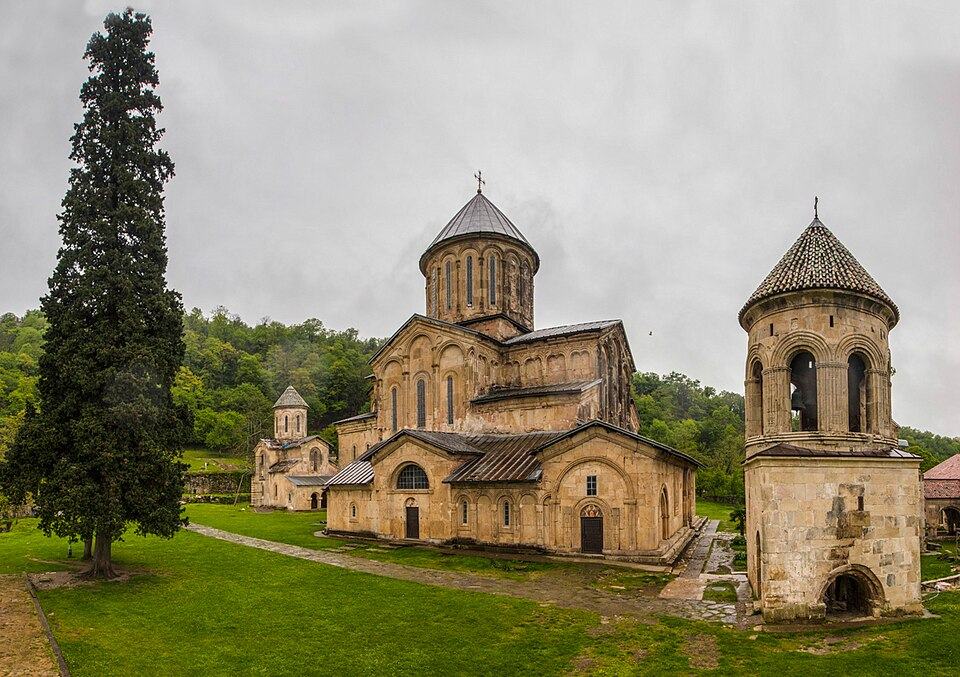 Gelati MonasteryPhoto: Ihor Burliai, CC BY-SA 3.0
Gelati Monastery stands on a wooded hillside about 10 km north-east of Kutaisi, above the Tskaltsitela valley. It is one of the key sites of medieval Georgia: a royal monastery, a burial place of kings and, in the 12th century, a centre of learning known as the Gelati Academy. The main Church of the Virgin holds a large 12th-century mosaic of the Virgin and Child flanked by archangels, rare in Georgia, and its walls are covered in frescoes painted between the 12th and 17th centuries, including portraits of Georgian kings.
The complex is compact and easy to see in an hour. Besides the main church there are the 13th-century churches of St George and St Nicholas, a bell tower and the old academy building. David the Builder lies under the south gate, and the iron Gates of Ganja, a war trophy, are kept nearby. Conservation work has gone on for years, so parts of the interior may be under scaffolding when you visit. It is an active monastery with resident monks.
History
King David IV, known as David the Builder, founded Gelati in 1106 as a monastery and academy, and contemporaries called it a new Hellas for its scholars, among them the philosopher Ioane Petritsi. David chose it as his burial place, and later Georgian rulers added churches and paintings over the following centuries. In 1138 his son Demetrius I brought back the Gates of Ganja as a trophy of war. Gelati was inscribed on the UNESCO World Heritage List in 1994.
What to see and do
- The 12th-century apse mosaic of the Virgin and Child
- Frescoed portraits of Georgian kings and queens
- David the Builder's tomb in the south gate
- The Gates of Ganja, taken as a trophy in 1138
- The churches of St George and St Nicholas
How to visit
Getting there
About 10 km north-east of Kutaisi, around 20 minutes by taxi. Occasional marshrutkas run from Kutaisi, but a taxi combined with Motsameta is easier. From Tbilisi allow about 3.5 hours by car.
When to go
Mornings, year-round. Plan 1–1.5 hours here.
- Dress modestly: covered shoulders and knees; women should cover their hair and wear a skirt (wraps are usually available at the door)
- Keep quiet and avoid photographing people during services
- Combine with Motsameta Monastery, about 10 minutes away by road
- Expect some scaffolding, as conservation work is ongoing
Gelati Monastery: FAQ
Who is buried at Gelati Monastery?
King David IV, David the Builder, is buried under the south gate. Tradition says he chose the spot so that everyone entering would step over his grave as a sign of humility. Other Georgian royals were later buried in the complex.
How long does it take to visit Gelati?
About an hour is enough to see the main church, the smaller churches and David the Builder's tomb. Add 30 to 45 minutes if you combine it with nearby Motsameta.
Tours that include Gelati Monastery
Read more in our guides
 Photo: Alexxx1979, CC BY-SA 4.0
A day-by-day loop from Tbilisi through Uplistsikhe, Kazbegi and Kakheti, showing how long each drive takes, where to eat and sleep, and realistic 2026 costs.
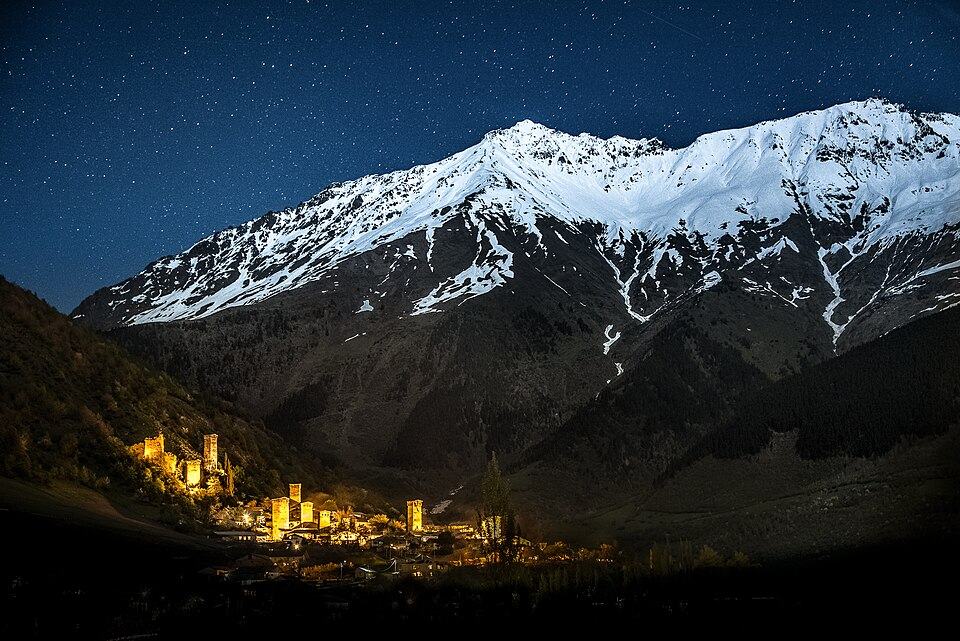 Photo: Q-lieb-in, CC BY-SA 4.0
Colour starts near the treeline in late September and reaches Tbilisi in November. Here is when each region peaks, the walks to do there and which mountain roads shut first.
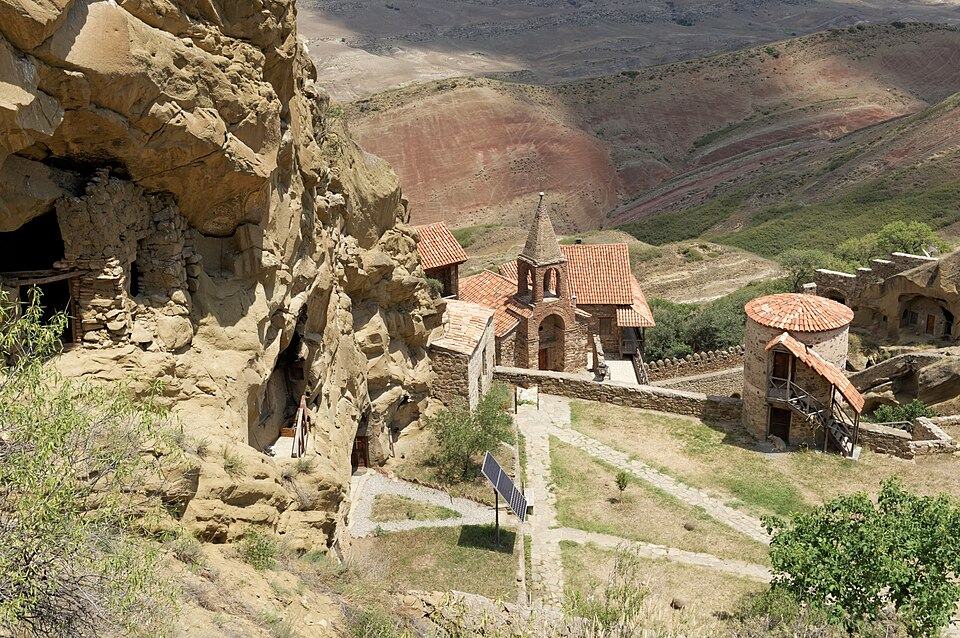 Photo: Vyacheslav Argenberg, CC BY 4.0
When to go for hiking, wine, beaches or skiing, with monthly weather for Tbilisi, the coast and the Caucasus and the festivals worth timing a trip for.
Nearby places
Straight-line distance from Gelati Monastery.