- Georgia holds the oldest chemical evidence of grape wine: residues in pottery jars from Gadachrili Gora and Shulaveris Gora, about 50 km south of Tbilisi, dated to around 6000 BC.
- Traditional Georgian wine ferments and matures in qvevri, egg-shaped clay jars buried in the ground, and UNESCO added the method to its intangible heritage list in 2013.
- White grapes left on their skins in qvevri give amber wine, Saperavi gives dark reds, and appellations such as Kindzmarauli and Khvanchkara are naturally semi-sweet.
- Kakheti grows most of the grapes and is the easiest region for cellar visits, while Kartli, Imereti and Racha-Lechkhumi each have their own varieties and styles.
- Rtveli, the harvest, lasts roughly from the middle of September to the middle of October in Kakheti and is the best time to stay with a winemaking family.
Georgian wine is the oldest continuous wine tradition in the world, and what makes it different is the qvevri: a large clay jar sunk up to its neck in the cellar floor, where crushed grapes ferment with their skins and then rest for months. Walk into almost any village house in Kakheti and you will find one. This guide explains how the method works, what amber wine is, which grapes and place names matter on a label, and how to taste wine where it is made.
Georgia counts more than 500 native grape varieties and around 29 registered appellations, so labels look confusing at first. A handful of names cover most of what you will be poured: Saperavi and Rkatsiteli, the Kakhetian appellations of Mukuzani, Kindzmarauli and Tsinandali, and the semi-sweet reds of Racha. Below you will find those explained, along with chacha, the harvest season, how to behave in a family marani and practical advice on getting bottles home in one piece.
Is Georgia the oldest wine country in the world?
On current evidence, yes. In 2017 a Georgian, Canadian and American team, including the biomolecular archaeologist Patrick McGovern, published results from two Neolithic villages, Gadachrili Gora and Shulaveris Gora, in the Kvemo Kartli lowlands about 50 km south of Tbilisi. Lab tests on pottery from large jars found tartaric acid, the chemical fingerprint of grapes, together with malic, succinic and citric acids. The jars date to about 6000 BC, which moved the earliest chemical proof of winemaking back by six centuries or more, ahead of the previous record from the Zagros Mountains of Iran.
Both villages belonged to the Shulaveri-Shomu culture, early farmers who lived in clusters of round mud-brick houses. Grape pollen from the soil suggests vines grew close by, and one jar carries raised decoration that some researchers read as bunches of grapes. Together the finds back up the Georgian claim of 8,000 vintages.
Wine has stayed at the centre of Georgian life ever since. Saint Nino, who converted Georgia to Christianity in the 4th century, is said to have carried a cross of vine stems bound with her own hair, and grapevines are carved on many medieval church facades. Under Soviet rule, volume replaced quality and huge factories made wine for the Russian market, but village families kept their qvevri, and the old methods revived strongly after independence in 1991.
What is a qvevri and how is qvevri wine made?
A qvevri is an egg-shaped clay vessel with a pointed base, built up by hand from coils of local clay and fired in a kiln. Sizes run from a few dozen litres to well over 2,000 litres. While the jar is still warm, its inside is sealed with beeswax, and it is then buried to the rim in the earth floor of a marani, the wine cellar, where the soil holds the temperature steady all year. Only a few master potters still make them, in villages such as Vardisubani in Kakheti, Makatubani in Guria and Shrosha in Imereti.
- Pick
Grapes are harvested by hand in autumn, during rtveli. - Crush
Bunches are trodden or pressed in a satsnakheli, a long trough of wood or stone. The juice stays together with the solids, which Georgians call chacha. - Fill
Juice, skins, seeds and, in Kakheti, part of the stems go into the qvevri. Fermentation starts by itself, driven by wild yeasts from the fruit and the cellar. - Punch down
For two to four weeks the must bubbles and a thick cap of skins rises. The winemaker pushes it back under with a wooden paddle several times a day. - Seal
Once fermentation is over, the jar is topped up and closed with a stone or wooden lid sealed with clay or earth. - Rest
In the Kakhetian tradition the wine sits on its skins through the winter, often for five or six months. The solids drop into the narrow base and the wine clears without filtering. - Rack and clean
In spring the clear wine moves to a clean qvevri or into bottles. The empty jar is scrubbed with water and lime, traditionally using a brush of cherry bark, ready for the next vintage.
UNESCO added the ancient Georgian qvevri method to its intangible heritage list in December 2013. The listing covers the whole culture around it: making the jars, tending the vines, the cellar work and the songs, toasts and family gatherings that go with each stage.
Methods vary by region. Kakheti uses all the skins and long contact, which gives the most tannic and deeply coloured wines. Imereti uses smaller jars called churi and adds only part of the skins, and Kartli falls in between. Many modern wineries mix approaches, fermenting in qvevri and finishing in steel or oak.
Amber, white and red Georgian wine: what is the difference?
Amber wine
Amber wine, karvisperi in Georgian, is white wine made the way red wine is: the juice ferments and rests with its skins. The skins give colour, from deep gold to orange-brown, and tannin that makes the wine feel grippy and dry. Expect dried apricot, quince, walnut, black tea and honey. Outside Georgia the same style is usually called orange wine. Serve it lightly cool rather than fridge-cold, with food: it works brilliantly with walnut dishes, cheese and grilled pork.
White wine
Most white wine in shops is made in the European style: the grapes are pressed, the skins removed and the juice fermented cool in steel tanks. The result is fresh, light and aromatic. Tsinandali, a dry blend of Rkatsiteli with a smaller share of Mtsvane, is the classic example.
Red wine
Georgian red means Saperavi above all. Its juice is red as well as its skin, so it gives dense, dark wine with lively acidity. Young qvevri Saperavi can be firm and earthy, and good examples age for years. Western reds from grapes such as Otskhanuri Sapere, Aleksandrouli and Ojaleshi tend to be lighter.
Naturally semi-sweet wine
This is a Georgian speciality. Fermentation is halted by cold while some natural grape sugar remains, and nothing is added. Kindzmarauli and Akhasheni from Saperavi, Khvanchkara from Racha and the white Tvishi from Lechkhumi are the famous names. Soviet drinkers loved the style, and many Georgians still serve it with fruit and sweets.
Georgian grape varieties to know
Of Georgia's 500 or so native varieties, a few dozen are grown commercially. These are the ones you will meet in cellars and on wine lists.
| Grape | Colour | Main areas | What to expect |
|---|---|---|---|
| Saperavi | Red, with red flesh | Everywhere, above all Kakheti | Inky, high-acid reds from dry to semi-sweet; the name refers to dye |
| Rkatsiteli | White | Kakheti, Kartli | The most planted white: crisp and appley from steel, nutty and tannic as amber |
| Mtsvane Kakhuri | White | Kakheti, especially Manavi | Floral and aromatic with stone fruit; the partner grape in Tsinandali |
| Kisi | White | Kakheti, around Akhmeta | Rescued from near extinction; spicy amber wines with pear and quince |
| Khikhvi | White | Kakheti | Rare and honeyed; rich amber wines and fortified Kardenakhi |
| Chinuri | White | Kartli | Fresh and crisp, the base of sparkling Atenuri |
| Tsolikouri | White | Imereti, Lechkhumi | The main white of the west; dry in Imereti, semi-sweet as Tvishi |
| Tsitska | White | Imereti | Sharp acidity and citrus, widely used for sparkling wine |
| Krakhuna | White | Imereti | Rounder and fuller, with apricot and honey |
| Aleksandrouli | Red | Racha | Cherry and raspberry; the leading grape of Khvanchkara |
| Mujuretuli | Red | Racha | Blended with Aleksandrouli to add body and perfume to Khvanchkara |
| Usakhelouri | Red | Lechkhumi | Very rare and prized; fragrant small-batch wines, often semi-sweet |
| Otskhanuri Sapere | Red | Imereti | Dark, tart and tannic; rewards time in bottle |
| Chkhaveri | Pink-skinned | Guria, Adjara | Light reds and rosés, often off-dry or sparkling |
| Ojaleshi | Red | Samegrelo | Spicy, medium-bodied reds |
Georgia's wine regions and appellations
Georgia protects its wine names as appellations of origin, and most of them are in Kakheti. The name on the label tells you the place, the grape and usually the style.
| Appellation | Area | Grapes | Style |
|---|---|---|---|
| Tsinandali | Kakheti, Telavi area | Rkatsiteli with Mtsvane | Dry white |
| Mukuzani | Kakheti, Gurjaani area | Saperavi | Dry red, one of the most respected |
| Kindzmarauli | Kakheti, Kvareli area | Saperavi | Naturally semi-sweet red |
| Kvareli | Kakheti, Kvareli area | Saperavi | Dry red |
| Napareuli | Kakheti, Telavi area, left bank | Saperavi, Rkatsiteli | Dry red and dry white |
| Akhasheni | Kakheti, Gurjaani area | Saperavi | Naturally semi-sweet red |
| Manavi | Kakheti, Sagarejo area | Mtsvane | Dry white |
| Atenuri | Kartli, near Gori | Chinuri, Goruli Mtsvane | White, often sparkling |
| Khvanchkara | Racha, Ambrolauri area | Aleksandrouli, Mujuretuli | Naturally semi-sweet red |
| Tvishi | Lechkhumi, Tsageri area | Tsolikouri | Naturally semi-sweet white |
Kakheti
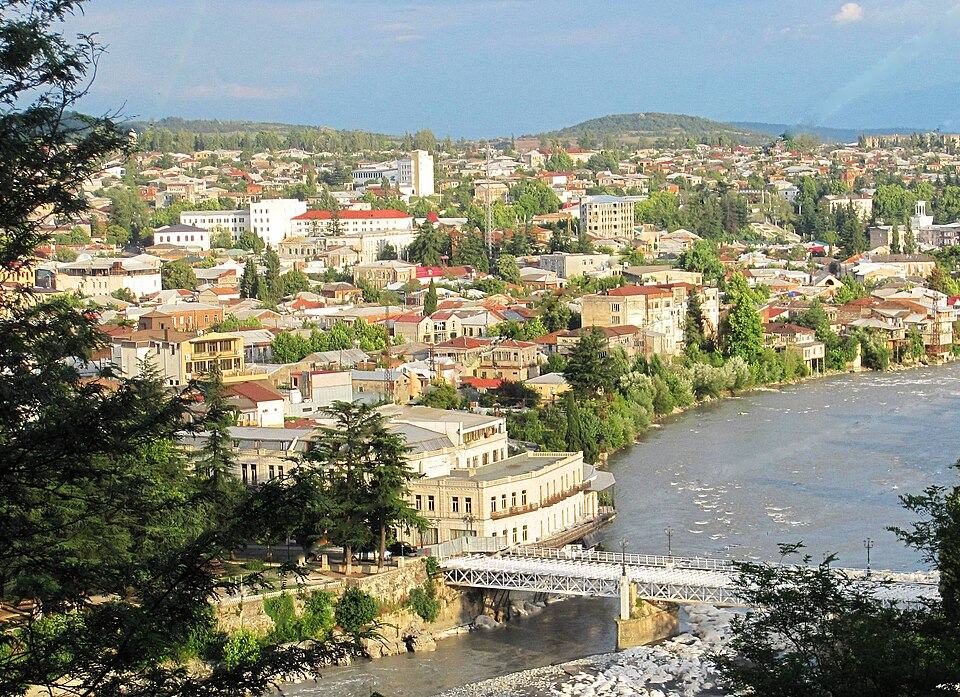
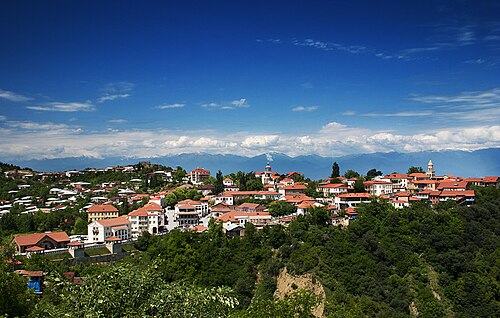
Kakheti, in the far east, has about 70 percent of the country's vineyards, laid out along the Alazani Valley between the Gombori range and the Greater Caucasus. Right-bank villages such as Tsinandali, Mukuzani and Akhasheni look across the valley to the mountains; the left bank, around Kvareli and Napareuli, sits directly beneath them. Telavi, Sighnaghi and Kvareli are the usual bases.
Kartli, Imereti and Racha-Lechkhumi
Kartli, the closest wine region to Tbilisi, makes cooler, lighter wines: Chinuri and Goruli Mtsvane whites, sparkling Atenuri from the valley near Gori, and reds such as Tavkveri and Shavkapito. Imereti's wines are fresher still, from Tsitska, Tsolikouri, Krakhuna and Otskhanuri Sapere, and small family producers around Kutaisi, Zestaponi and Baghdati often pour them with a full Imeretian meal. In Racha-Lechkhumi, steep slopes above the Rioni and Tskhenistskali rivers give tiny quantities of Khvanchkara, Tvishi and rare Usakhelouri, so buy them at the source to be sure they are genuine.
On the Black Sea side, Guria, Adjara and Samegrelo make small amounts of Chkhaveri and Ojaleshi, mostly in family cellars.
What is chacha?
Chacha is Georgian grape brandy, a clear spirit distilled from the skins, seeds and stems left after winemaking; the word means grape pomace. Most families with vines run their own small still in late autumn, and commercial bottles range from simple and fiery to smooth versions aged in oak. Strength is typically 40 to 60 percent alcohol, and homemade chacha can be stronger.
You will be offered it as a welcome, as the first toast of a meal, as a digestif, and in the mountains even with breakfast on cold mornings. Sip it from a small glass alongside food rather than knocking it back. Some producers flavour it with tarragon, honey or fruit.
How to visit wineries and family cellars in Kakheti
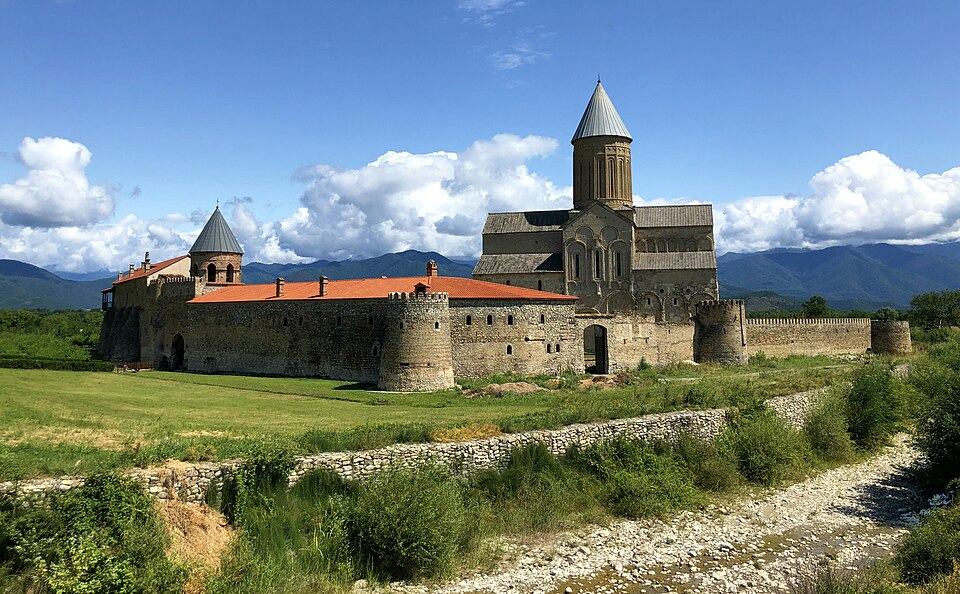
Kakheti offers three kinds of wine visit, and the best trips combine them. Big estates such as Tsinandali and the Khareba tunnel at Kvareli have tasting rooms, English-speaking staff and set menus, and you can usually walk in. Monastery cellars, Alaverdi above all, make qvevri wine with the monks. Family cellars, often attached to a guesthouse, are the most personal: the winemaker lifts the lid of a qvevri and pours with an orshimo, a gourd ladle on a long handle, usually with bread, cheese and a full meal if you arrange it.
- Choose a base
Telavi and Sighnaghi are around two hours from Tbilisi and put most cellars within 40 minutes. Kvareli suits the left-bank wineries. The shorter Gombori Pass road to Telavi had a long closure in 2025, so check road status. - Book family cellars ahead
They are homes, not shops. Ask your guesthouse or guide to call a day or more in advance and say if you want just a tasting or a full meal. - Keep it to three stops
Pours are generous and a cellar lunch can last hours. Two or three visits a day is plenty. - Hire a driver
Georgia has strict drink-driving rules and village roads are narrow. A driver for the day is worth every lari. - Carry cash
Small producers rarely take cards for bottles or chacha.
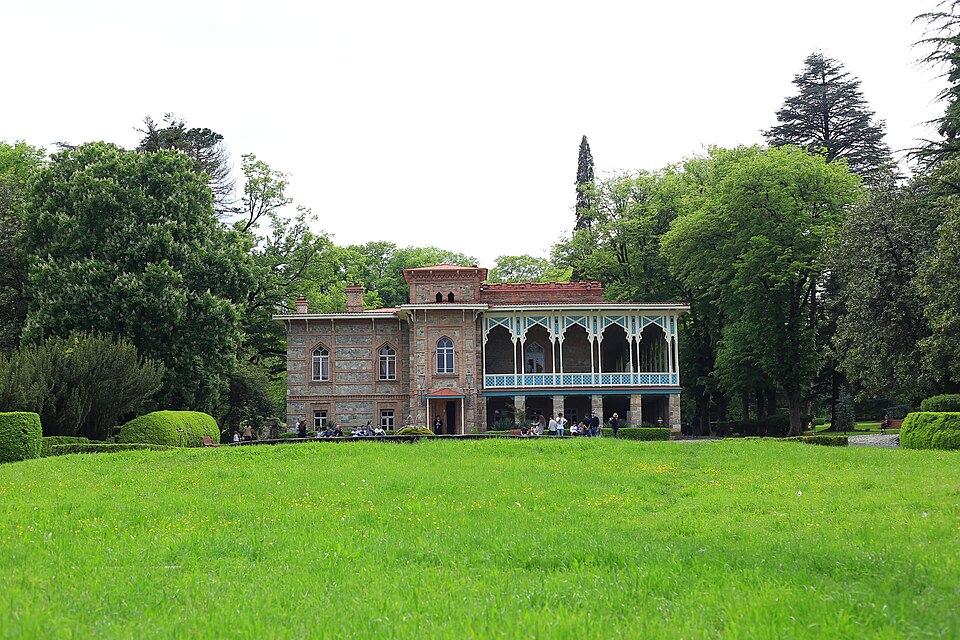
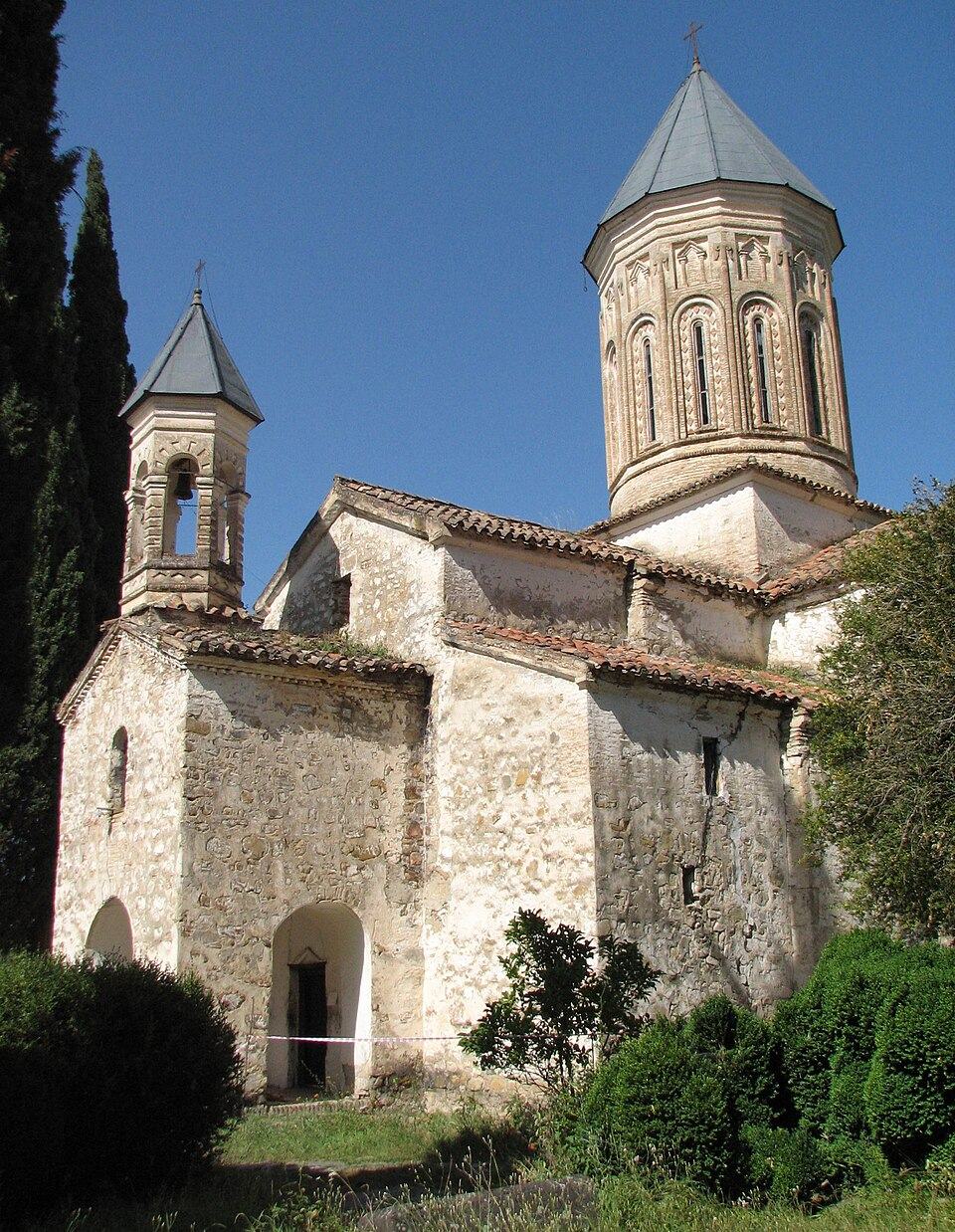
Ikalto, near Telavi, keeps a medieval stone wine press beside the ruins of its old academy, and Sighnaghi is home to Pheasant's Tears, one of the wineries that took qvevri wine to an international audience from the late 2000s.
Wine tasting etiquette in Georgia
- At a family cellar, the tasting is hospitality, not a sales pitch. Accept the first glass, ask about the grape and the vintage, and buy a bottle if you liked it.
- Spitting is normal at commercial tastings but unusual at a family table. Small sips are fine, and so is leaving wine in the glass.
- At a meal, wine follows the toasts. Wait for one, raise your glass and say gaumarjos, cheers. At a full supra the tamada, or toastmaster, sets the pace.
- When someone hands a toast on to you, they say alaverdi. Add a few words of your own on the same theme, then drink.
- Bolomde means bottoms up. You do not have to drain the glass every time, and saying sakmarisia, enough, is accepted.
- Do not toast with beer. By tradition, beer toasts are kept for enemies.
- If you are handed a drinking horn, a kantsi, it cannot be set down until empty, so ask for a small pour.
Our guide to the Georgian supra explains the order of toasts and the tamada's role in more detail.
Where to taste natural wine in Tbilisi
If you cannot reach the wine regions, Tbilisi is the best place in the country to taste widely. Over the past fifteen years the capital has filled with natural wine bars and specialist shops, mainly in Sololaki, the Old Town and around Fabrika. They pour bottles from small producers in every region, many of them made in qvevri with no additives and little or no sulphur, and staff usually speak good English.
Ask for a flight to compare grapes, or for a wine from a region you are not visiting, such as Imereti or Racha. Many bars sell bottles to take away and serve cheese or small plates. Spring is festival season: the New Wine Festival, held in May in Mtatsminda Park, gathers producers pouring the first wines of the previous harvest, and the Zero Compromise natural wine fair takes place around the same time.

When is the grape harvest (Rtveli) in Georgia?
Rtveli, the grape harvest, is the busiest and happiest time of year in wine villages. In Kakheti it usually runs from about mid-September to mid-October. Imereti and Kartli pick in a similar window, while Racha, where vineyards sit higher, often finishes later in October. Exact dates follow the weather and are fixed only a few days ahead.
Families and neighbours start picking early in the morning, crush the grapes in the satsnakheli and fill the qvevri, and every evening ends with a meal in the yard. Markets fill with grapes and new qvevri, the air smells of fermenting must, and households boil fresh juice into tatara for churchkhela. Visitors can join in if it is arranged ahead, and towns such as Gurjaani hold wine festivals in October.
Buying Georgian wine and taking it home
Buy from producers when you can: the price is fair, the money stays with the family, and you get wines that never reach shops. Tbilisi wine shops stock a wide range and can advise on what travels well, and supermarkets carry the big brands. Airport duty-free sells wine after security, which helps if you only have hand luggage, though connecting flights can bring extra liquid checks.
Homemade wine is often sold in unlabelled plastic bottles. It can be excellent, but it does not keep and tends to leak, so drink it during the trip and take home glass bottles with labels. Unfiltered qvevri wine throws a sediment: stand the bottle upright for a day before opening.
- Wrap each bottle in clothes or a padded wine sleeve, seal it in a plastic bag and pack it in the middle of a hard suitcase.
- In hand luggage, wine counts as a liquid unless it was bought in airport duty-free.
- Georgia sets no fixed export limit on wine for personal use, but antiques and items of cultural value, such as old drinking horns, may need an export certificate.
- Your home country's allowance is what counts. In 2026, travellers entering the EU from outside it can bring 4 litres of still wine duty-free, the UK allows 18 litres, and the US allows 1 litre per adult, with duty payable above that. Check the current rules before you fly.
- For more than a suitcase holds, ask the winery or a Tbilisi shop about courier shipping, and check import duties at home first.
Georgian wine FAQ
Why is Georgia called the cradle of wine?
Pottery jars from two Neolithic villages south of Tbilisi, Gadachrili Gora and Shulaveris Gora, contain grape wine residues dated to about 6000 BC, the oldest chemical evidence of winemaking found so far. Georgians have made wine without a break ever since.
What is qvevri wine?
It is wine fermented and aged in a qvevri, a large egg-shaped clay jar buried in the ground. Grapes usually ferment with their skins and wild yeasts, then rest sealed for several months before the clear wine is drawn off.
Is amber wine the same as orange wine?
Yes. Both terms describe white wine fermented with its grape skins, which gives an amber or orange colour and some tannin. Georgians prefer the word amber, karvisperi, and have made wine this way for millennia.
What is the most famous Georgian wine?
Saperavi is the best-known grape. Among appellations, the dry red Mukuzani, the semi-sweet reds Kindzmarauli and Khvanchkara, and the dry white Tsinandali are the names most Georgians would mention first.
When should I go to Georgia for wine tasting?
Mid-September to mid-October, during Rtveli, when you can join the harvest. May is also good, with Tbilisi's spring wine festivals and green vineyards. Cellars welcome visitors all year if you book ahead.
Can I visit Kakheti wineries without a tour?
Yes. Large wineries like the Tsinandali estate and the Khareba tunnel at Kvareli take walk-in visitors, and guesthouses can set up family cellar tastings. You still need transport, and a driver means nobody has to drive after tasting.
How much wine can I take home from Georgia?
Georgia does not cap wine exports for personal use, so the limit is your destination's customs allowance and your airline's baggage weight. Pack bottles in checked luggage, well wrapped.