Why Georgia
A small country with everything in it
Georgia is a small country in the South Caucasus, about the size of Ireland, with the Black Sea to the west and the Greater Caucasus along its northern border. In a single week you can move from a capital of sulphur baths and wooden balconies to villages above 2,000 m, and back down to vineyards where wine is still fermented in clay jars buried in the ground, as it was thousands of years ago.
What brings people back is the welcome. Georgians like to say that every guest is sent by God, and the long table of a supra, with a tamada leading the toasts, is how that idea plays out in real life. Add good value, easy entry for most nationalities and something to do in every season, and it is easy to see why so many visitors return. Here are the reasons we think Georgia deserves your next trip, with the facts you need to plan it.
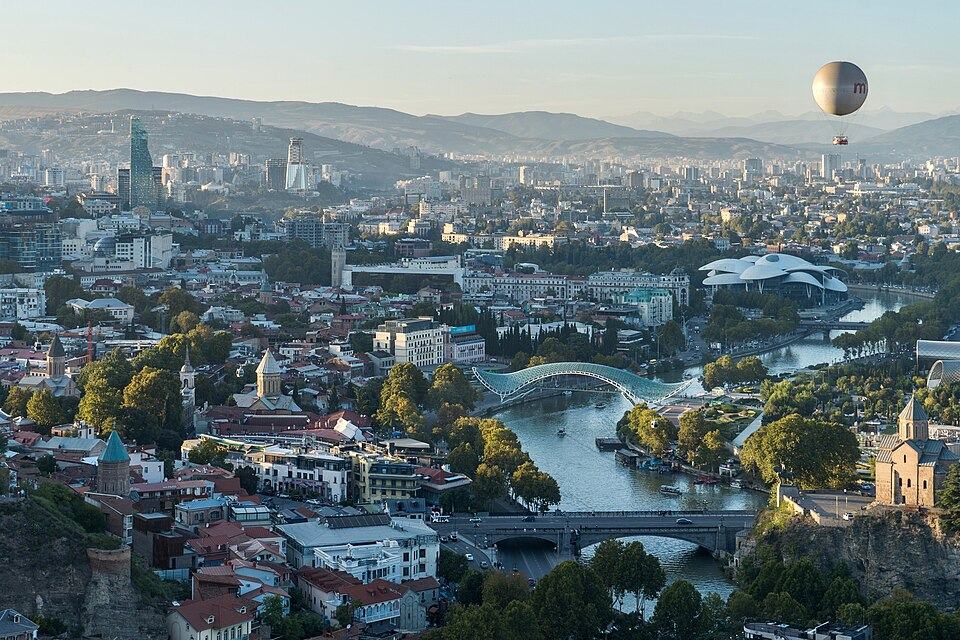 TbilisiPhoto: Alexey Komarov, CC BY-SA 4.0
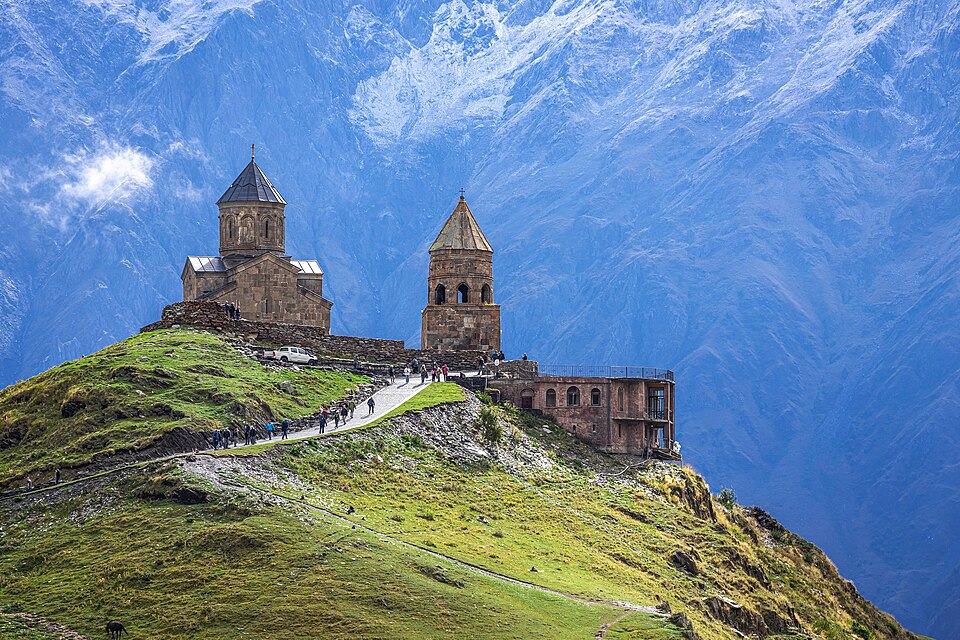 Gergeti, KazbegiPhoto: Supanut Arunoprayote, CC BY 4.0
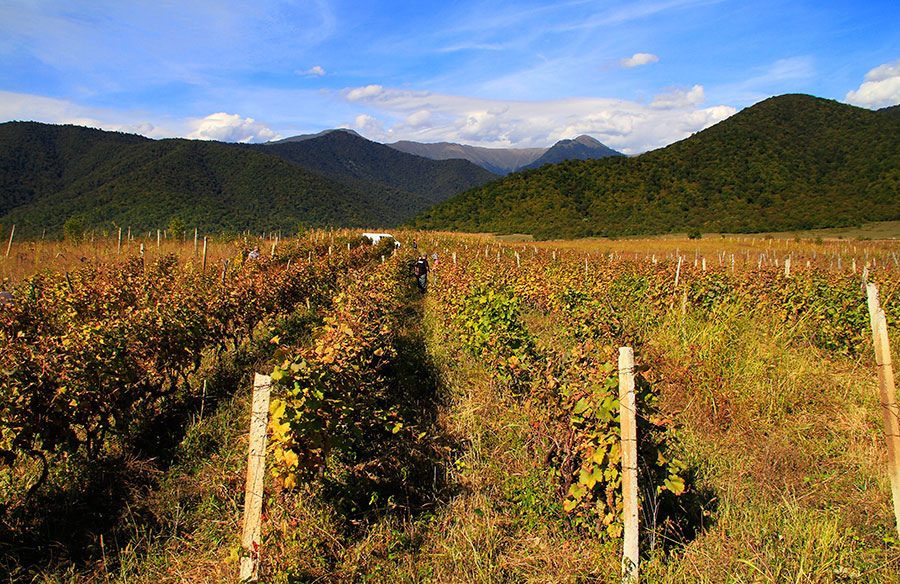 Kakheti vineyardsPhoto: Levan Gokadze, CC BY-SA 2.0
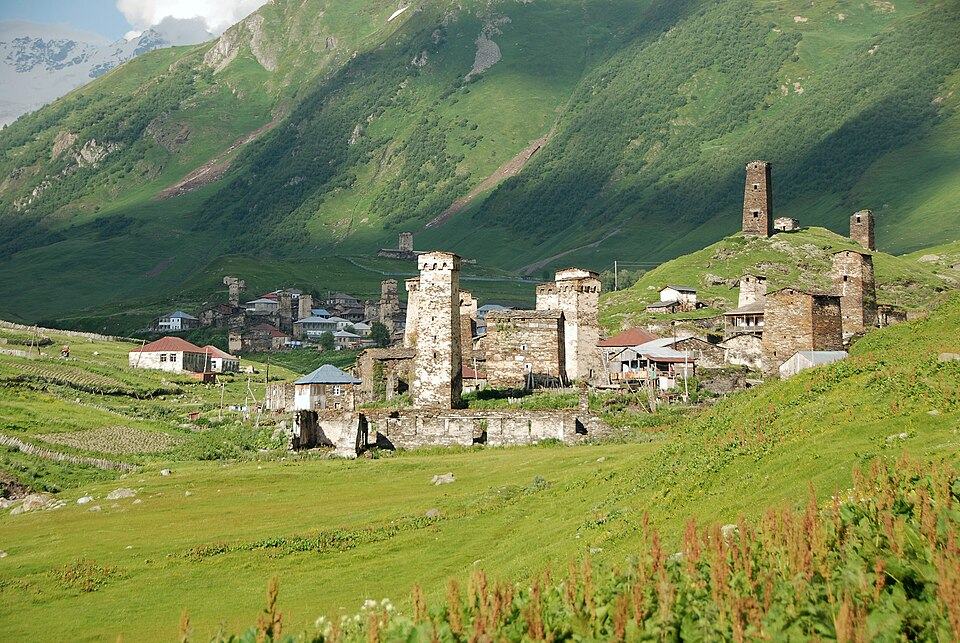 Ushguli, SvanetiPhoto: Florian Pinel, CC BY-SA 3.0
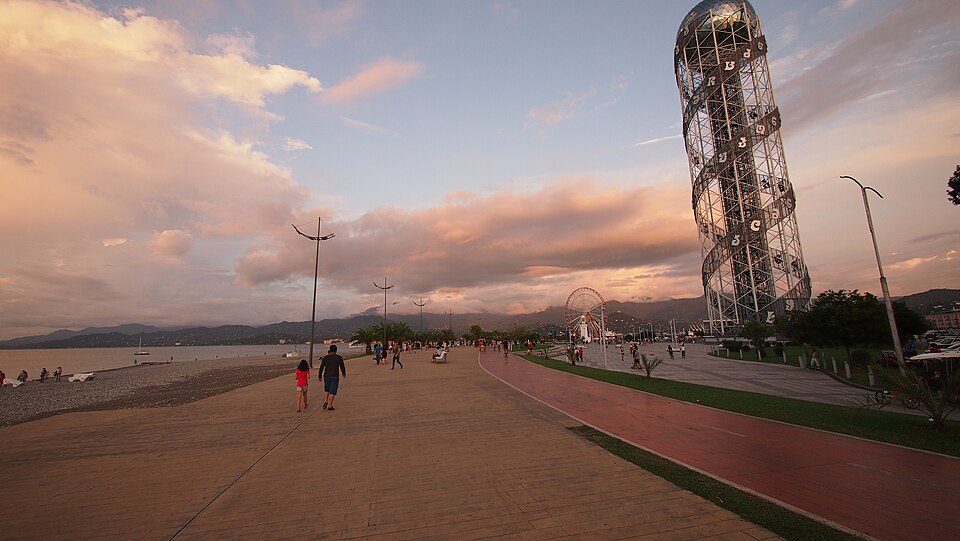 BatumiPhoto: Tomasz Przechlewski, CC BY 2.0
15 reasons to visit Georgia
Photo: Levan Gokadze, CC BY-SA 2.001The oldest wine tradition in the world
Archaeologists have found traces of grape wine in pottery from villages south of Tbilisi dating to about 6000 BC, among the earliest evidence of winemaking anywhere. Georgians still ferment grapes with their skins in qvevri, big earthenware jars set into the cellar floor, and UNESCO lists this way of making wine as intangible heritage. With more than 500 native grape varieties, from Saperavi to Rkatsiteli, every cellar tastes different, and family winemakers will happily pour you last autumn's vintage.
 Photo: Eugene Krasnaok, CC BY 4.0
02Food worth planning a trip around
Georgian cooking is built on walnuts, fresh herbs, pomegranate, cheese and bread baked in clay ovens. You will eat khachapuri, a cheese bread with a different shape in every region, khinkali soup dumplings, aubergine rolls with walnut paste and mtsvadi grilled over vine cuttings. Vegetarians eat well, thanks to dozens of bean, vegetable and walnut dishes traditionally eaten during Orthodox fasts. A filling meal at a local restaurant costs around 30 to 45 GEL per person.
Photo: Supanut Arunoprayote, CC BY 4.003The Caucasus without an expedition
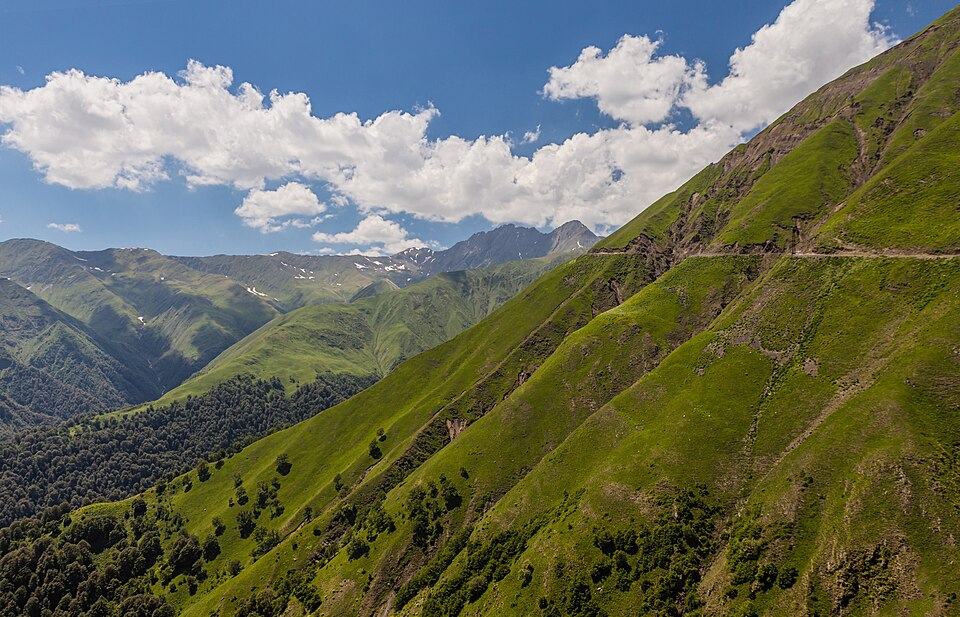
The Greater Caucasus runs the length of northern Georgia, with peaks over 5,000 m including Kazbek (5,054 m) and Shkhara, the country's highest. You can drive from Tbilisi to the foot of Kazbek in about three hours on a paved road, sleep in a guesthouse and be walking toward a glacier the next morning. Few mountains this high are this easy to reach, and the villages beneath them are still lived in and farmed.
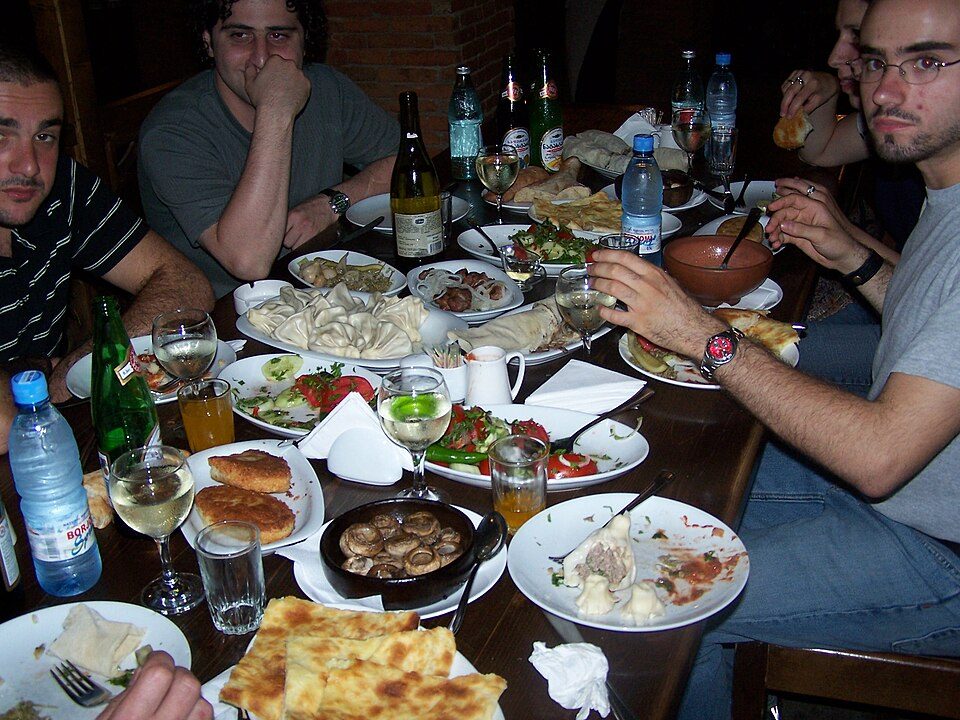 Photo: rugbyxm, CC BY 2.0
04Hospitality is a way of life
Maspindzeli means host in Georgian, and hosting is taken seriously here. A well-known saying holds that a guest is a gift from God, and visitors are often invited in for coffee, fruit or a glass of homemade wine. At a supra, the traditional feast, a toastmaster called the tamada leads toasts to peace, family, those who have died and friendship. If you are invited to one, say yes; it is the evening many travellers remember most.
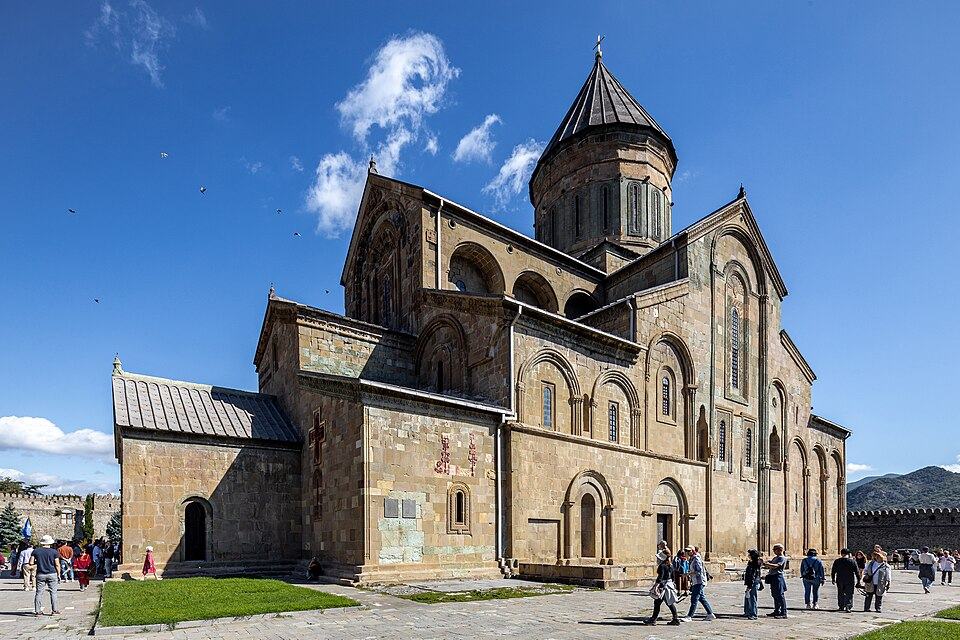 Photo: Supanut Arunoprayote, CC BY 4.0
05One of the first Christian nations
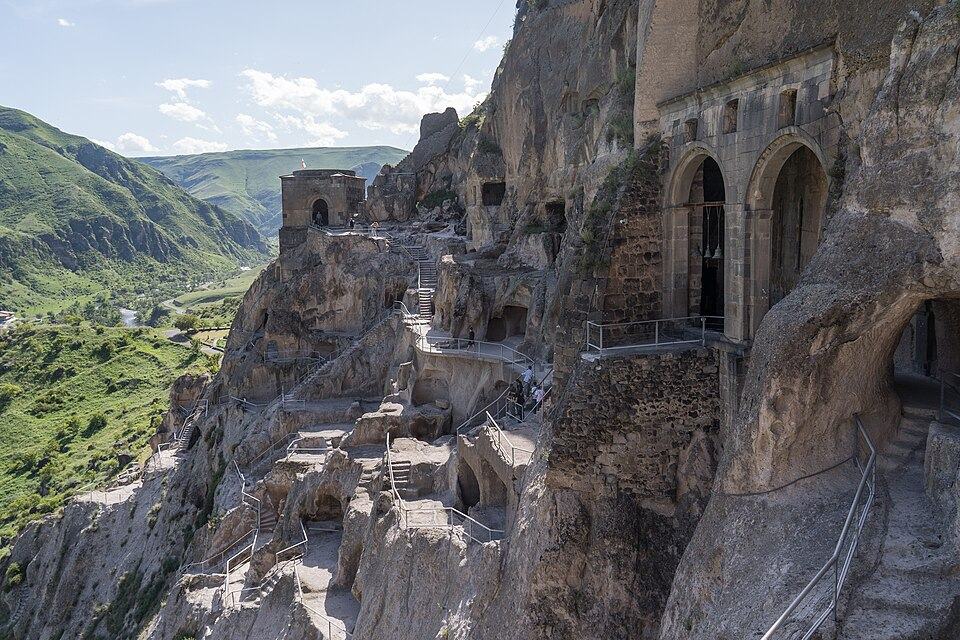
Georgia adopted Christianity as its state religion in the early 4th century, after Saint Nino converted King Mirian III. The result is a country of churches and monasteries in dramatic places: Gergeti Trinity beneath Kazbek, Jvari above two rivers, Alaverdi rising from the vineyards, and cave monasteries such as Vardzia and David Gareja. Most are still active, and on Sunday mornings you can hear services sung in Georgian polyphony.
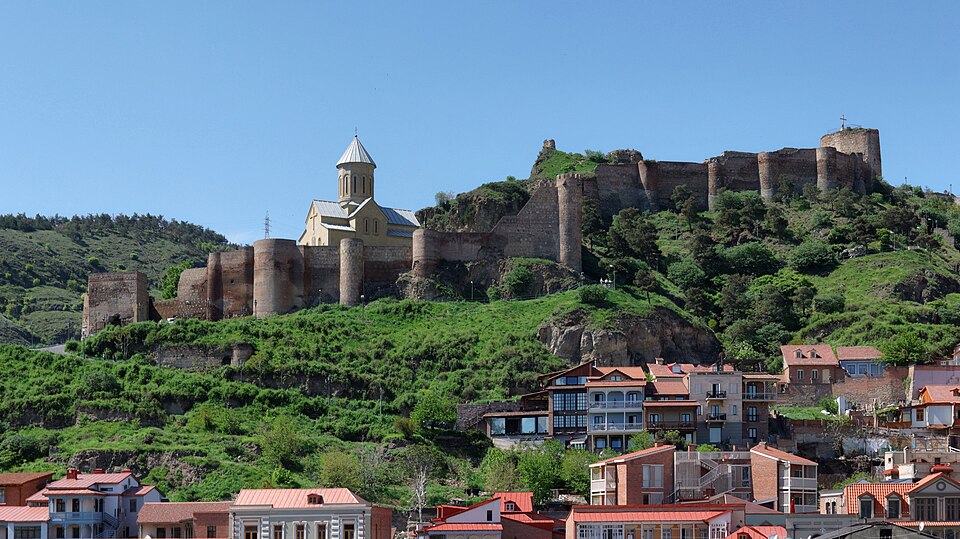 Photo: Alexxx1979, CC BY-SA 4.0
06Tbilisi, a capital with character
Tbilisi grew up around hot springs, and its Old Town still mixes domed sulphur baths, carved wooden balconies, Art Nouveau stairwells and bold Soviet modernist buildings. It is a city of about 1.4 million people with a lively natural wine bar scene, late dinners and a flea market full of Soviet memorabilia. It is compact enough to explore on foot and inexpensive by European standards. Give it at least two full days.
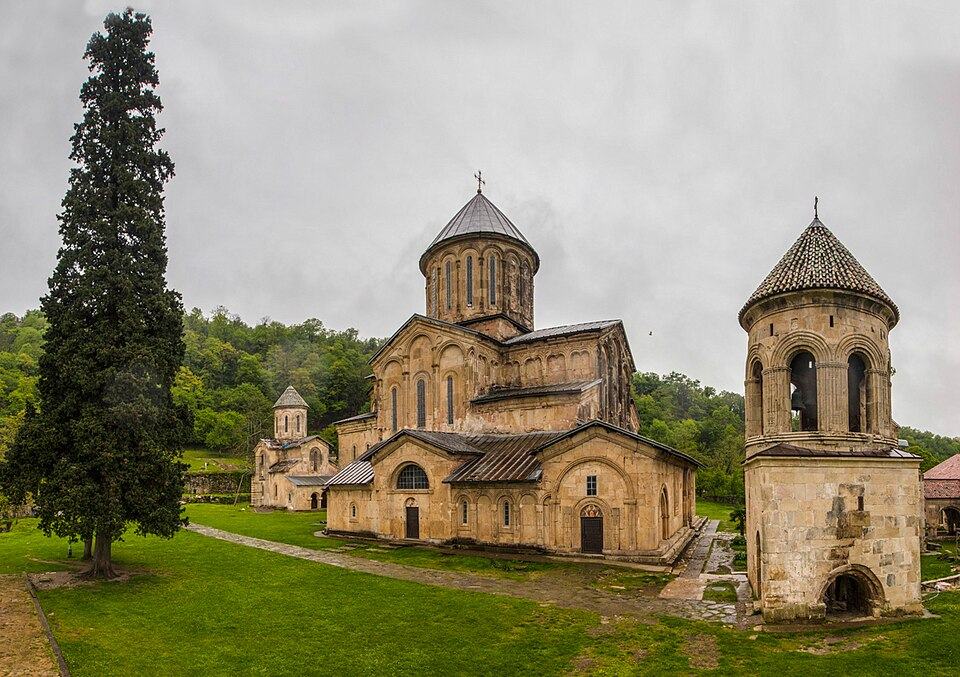 Photo: Ihor Burliai, CC BY-SA 3.0
07Four World Heritage sites and five living traditions
UNESCO lists four World Heritage sites in Georgia: the monuments of Mtskheta, Gelati Monastery near Kutaisi, the tower villages of Upper Svaneti and the Colchic rainforests and wetlands near the Black Sea. It also recognises five intangible traditions: polyphonic singing, qvevri winemaking, the three scripts of the Georgian alphabet, chidaoba wrestling and Georgian wheat culture. That is a lot of heritage for a country of under 4 million people.
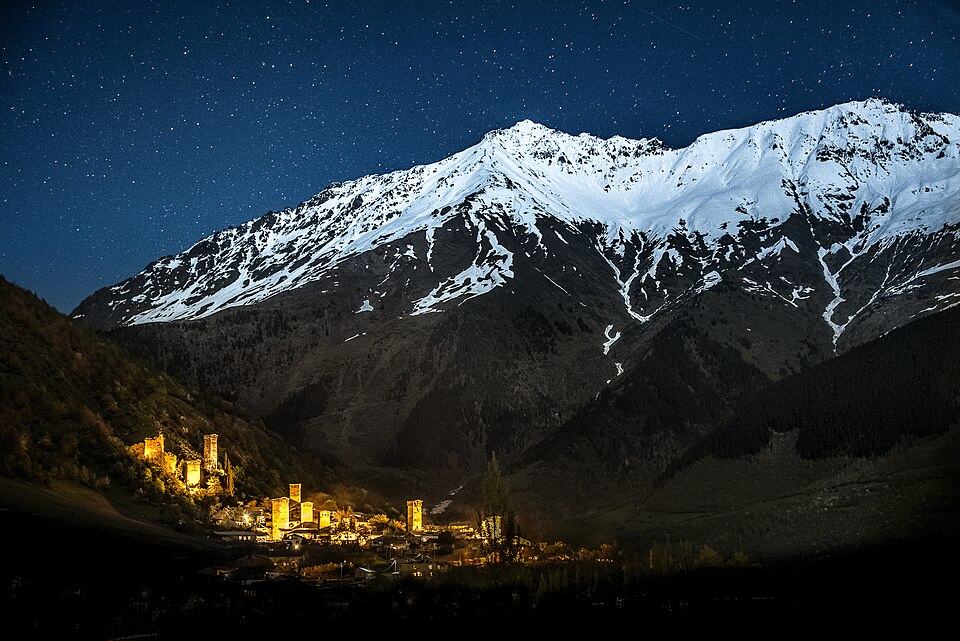 Photo: Q-lieb-in, CC BY-SA 4.0
08Hiking from village to village
Georgia is one of the easiest places in Europe to trek without carrying a tent. The four-day Mestia to Ushguli route in Svaneti, the Juta to Roshka crossing near Kazbegi and the trails of Tusheti all link villages with family guesthouses that serve dinner and breakfast. Borjomi-Kharagauli National Park has marked trails and simple shelters. The main hiking season at altitude runs from late June to early October.
Photo: Tomasz Przechlewski, CC BY 2.009Black Sea beaches and subtropical green
Western Georgia feels like a different country. Batumi has a long seaside boulevard and one of the largest botanical gardens of the former Soviet Union, while the hills behind it are covered in tea, citrus and ancient Colchic forest. The swimming season runs from June to September. Kutaisi, Georgia's third-largest city, is the base for canyons, caves and Gelati Monastery, and has many low-cost flights.
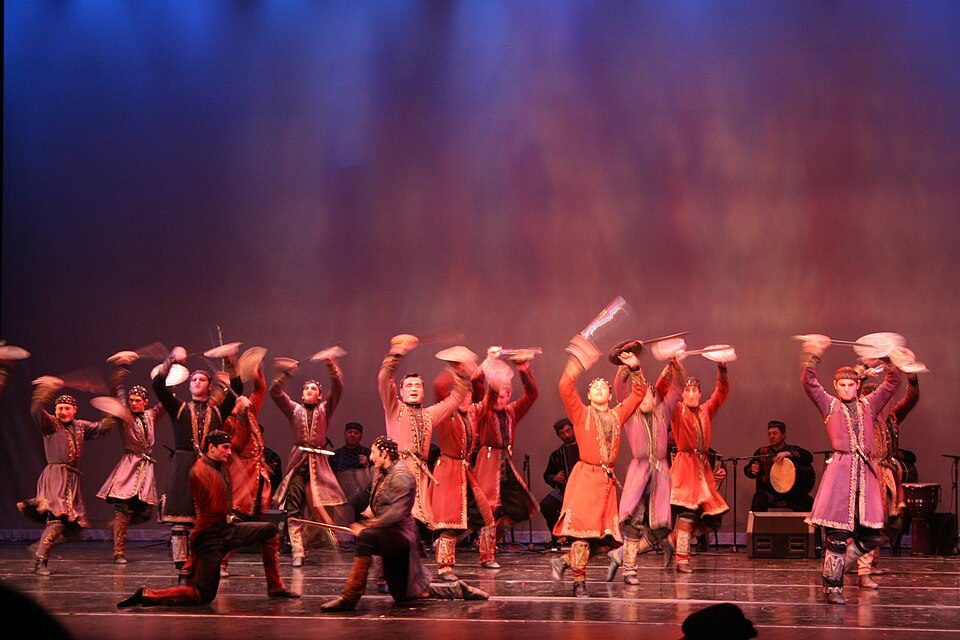 Photo: Alsandro, CC BY-SA 3.0
10Song, dance and a unique alphabet
Georgian polyphonic singing, with three interweaving voices, was among the first traditions UNESCO recognised, in 2001. Georgian folk dance is athletic and precise, and you can see it at performances in Tbilisi and at many feasts. The language has its own alphabet, with 33 curling letters in the modern Mkhedruli script, and it belongs to the Kartvelian family, unrelated to any language outside the Caucasus. You will see it everywhere, from street signs to wine labels.
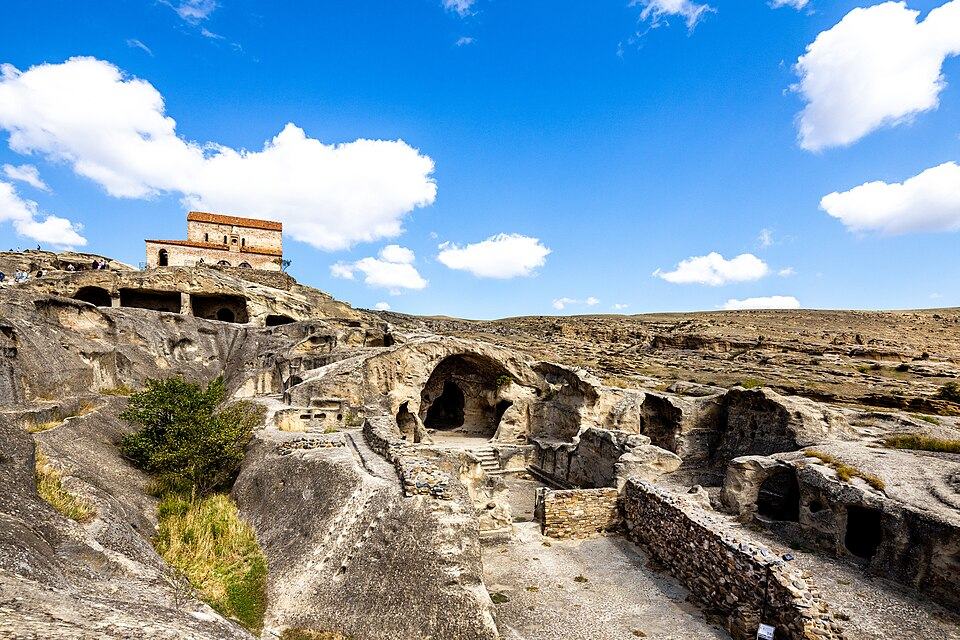 Photo: Supanut Arunoprayote, CC BY 4.0
11History from Dmanisi to the USSR
At Dmanisi, south-west of Tbilisi, archaeologists found human fossils about 1.8 million years old, among the oldest outside Africa. Western Georgia was ancient Colchis, the land of the Golden Fleece in Greek myth. The medieval kingdom peaked under David the Builder and Queen Tamar between the 11th and 13th centuries, and the Soviet era left Stalin's birthplace in Gori and mosaics across the country. You can travel through all of it in a few days.
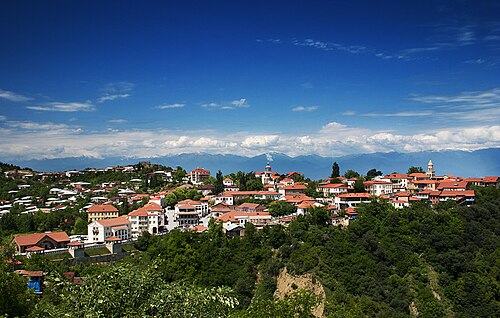 Photo: Levan Gokadze, CC BY-SA 2.0
12Safe and easy to travel
Georgia has low levels of violent crime, and solo travellers, women and families commonly explore the country independently. People will often go out of their way to help, even without a shared language. The things to watch are the driving, the weather in the mountains and the political protests that have been frequent in central Tbilisi since late 2024. Keep your distance from the boundary lines with the occupied regions. Otherwise, normal city precautions are enough.
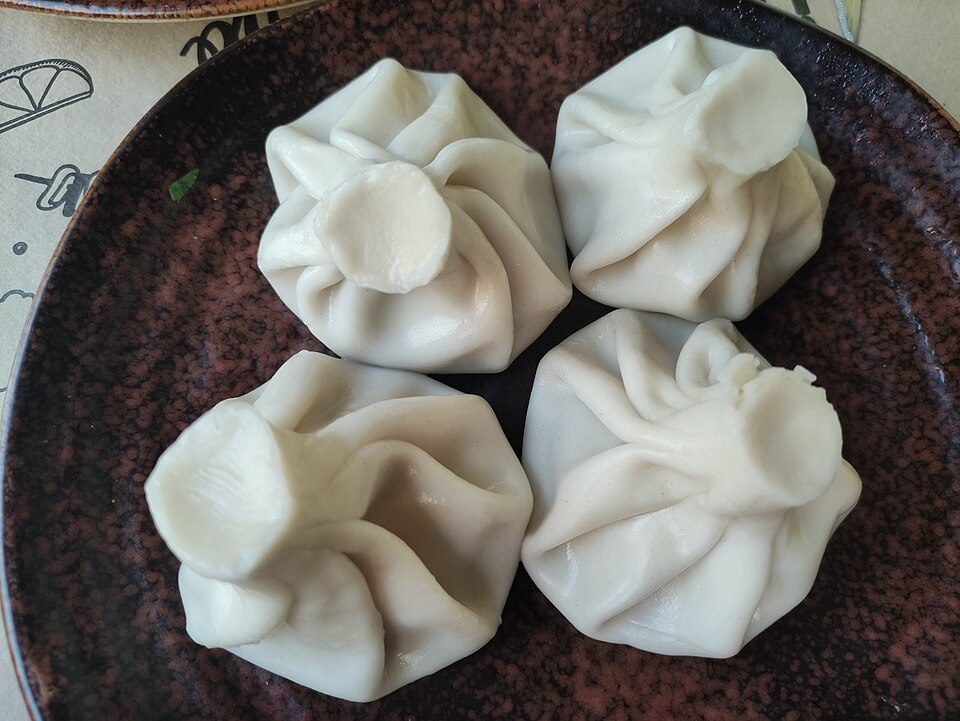 Photo: Francesc Fort, CC BY-SA 4.0
13Good value for money
A week in Georgia costs far less than a week in Western Europe. In 2026, a comfortable mid-range trip with good guesthouses, sit-down meals with wine and a shared driver costs roughly 250 to 450 GEL ($95 to $175) per person per day. Khinkali cost 1 to 2.5 GEL each, a metro ride is 1 GEL, and a good bottle of local wine from a shop starts at around 15 to 20 GEL. Tbilisi has become pricier, but the countryside is still cheap.
Photo: Alexey Komarov, CC BY-SA 4.014Easy entry for most nationalities
Citizens of more than 90 countries, including the EU, UK, US, Canada and Australia, can enter Georgia without a visa and stay for up to a year. Most others can apply for an e-visa online. Since 1 January 2026, foreign tourists also need insurance for medical care and accidents that lasts the whole stay and pays out at least 30,000 GEL. Direct flights link Tbilisi, Kutaisi and Batumi with Europe, the Middle East and Central Asia.
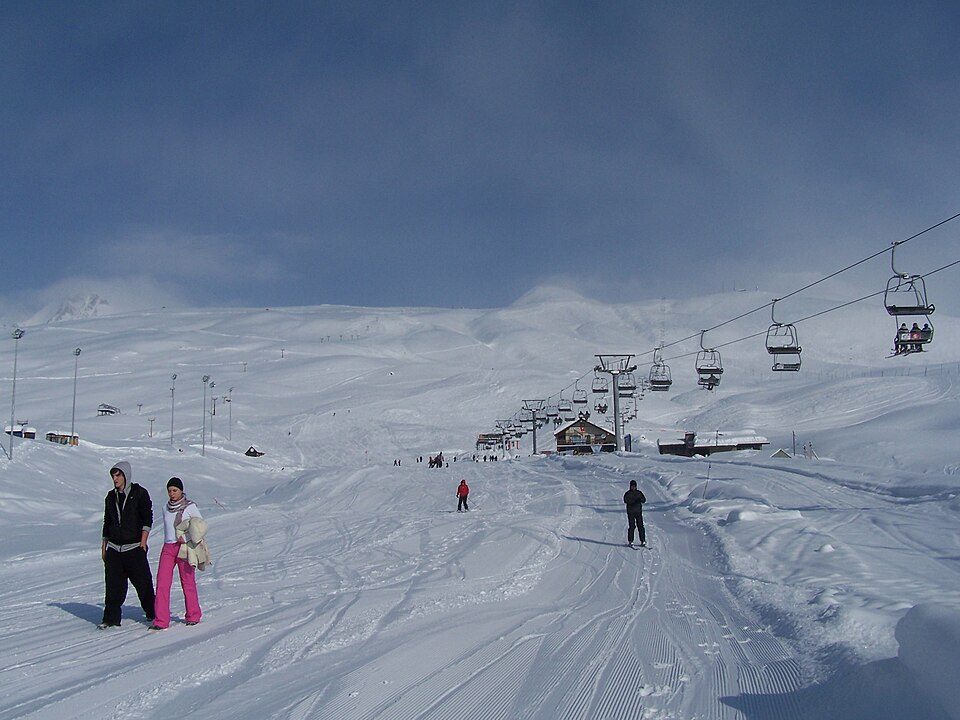 Photo: rugbyxm, CC BY 2.0
15Something good in every season
Spring brings blossom and bright green hills to Kakheti. Summer opens the high passes for trekking in Svaneti and Tusheti and warms the Black Sea. Autumn is harvest time, with grape picking in September and October and golden forests in the mountains. Winter means skiing in Gudauri, Bakuriani and Svaneti, lower hotel prices and steaming sulphur baths in Tbilisi. There is no bad month to come, just different trips.
Georgia at a glance
Georgia in pictures
A few of the places our guests remember most. Tap a photo to read about it.
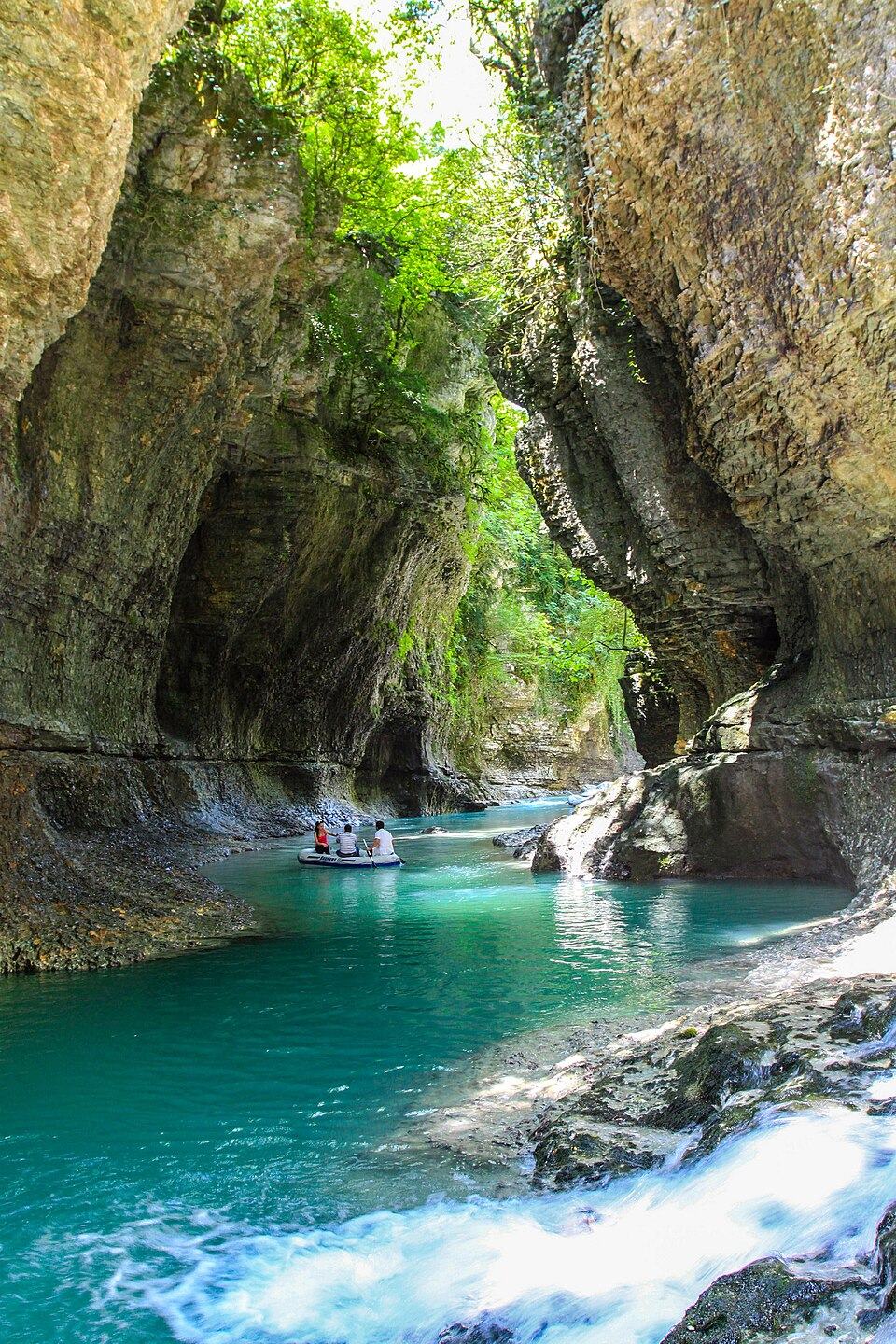
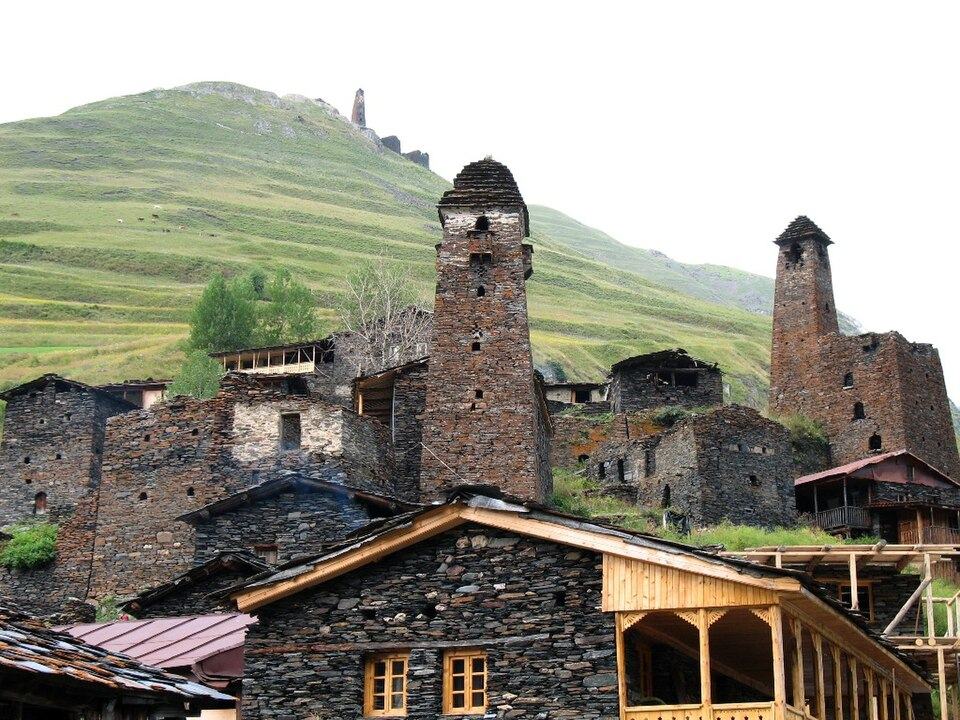
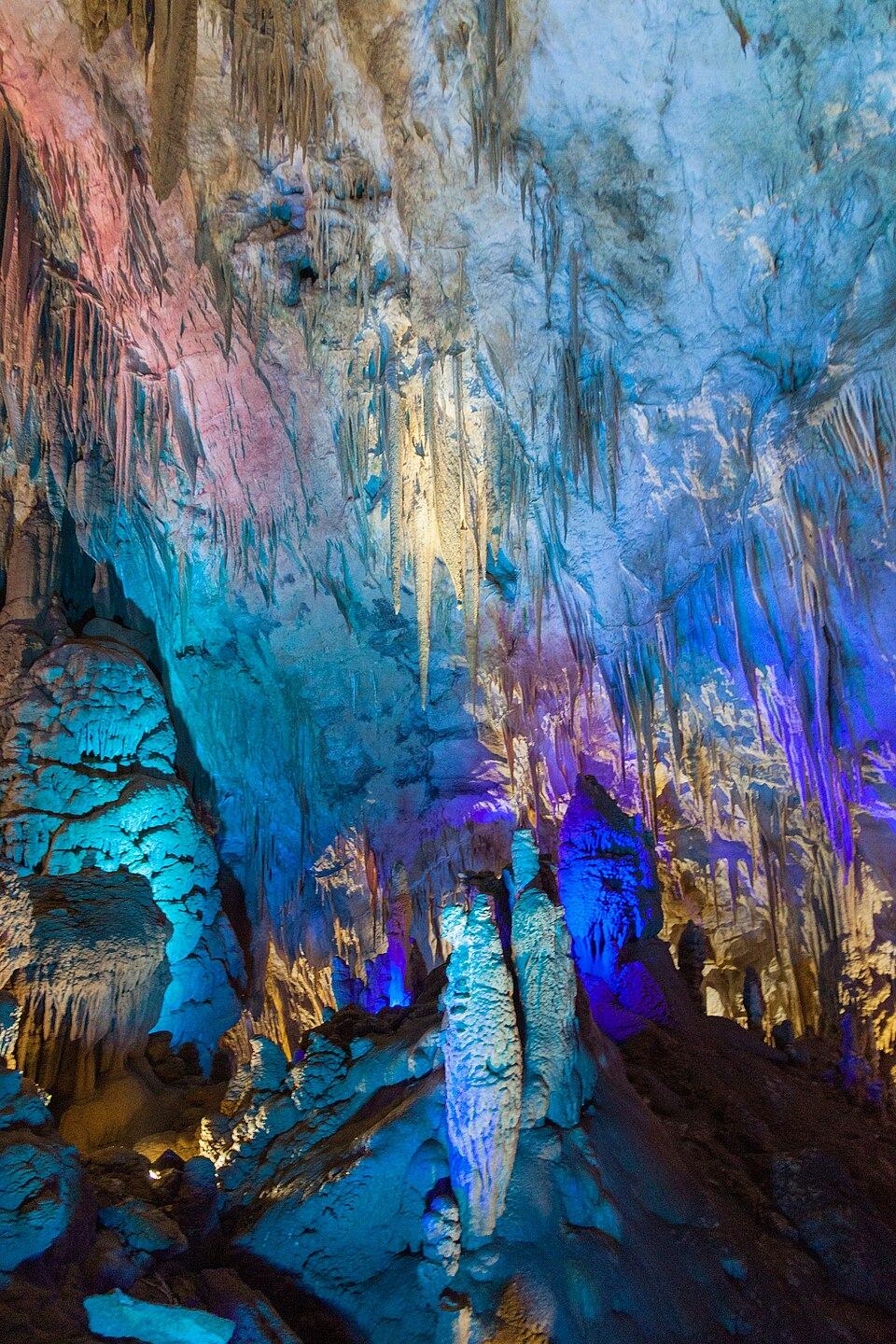
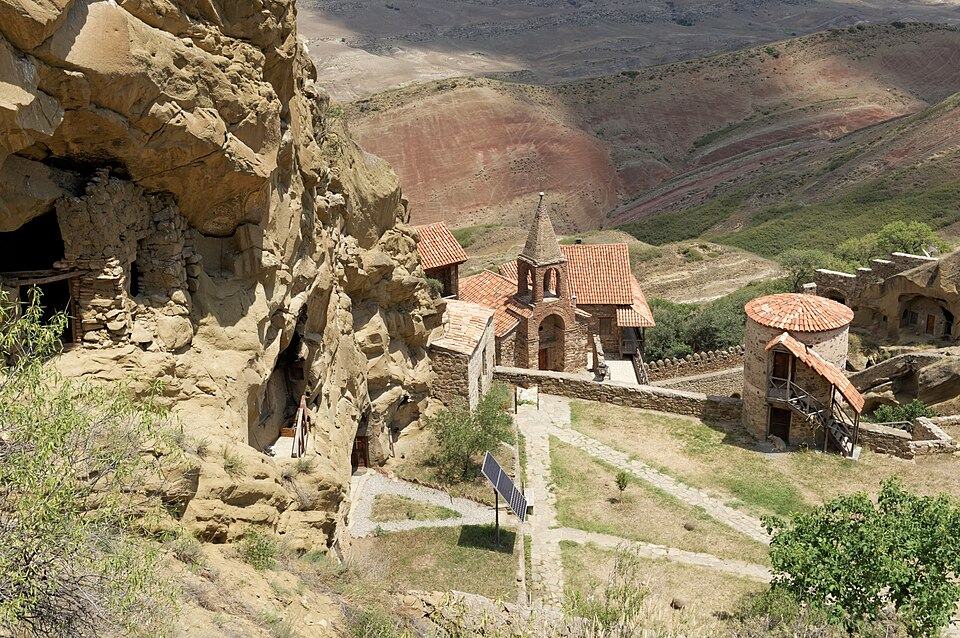
UNESCO heritage in Georgia
World Heritage sites you can visit, and the living traditions UNESCO lists as intangible heritage.
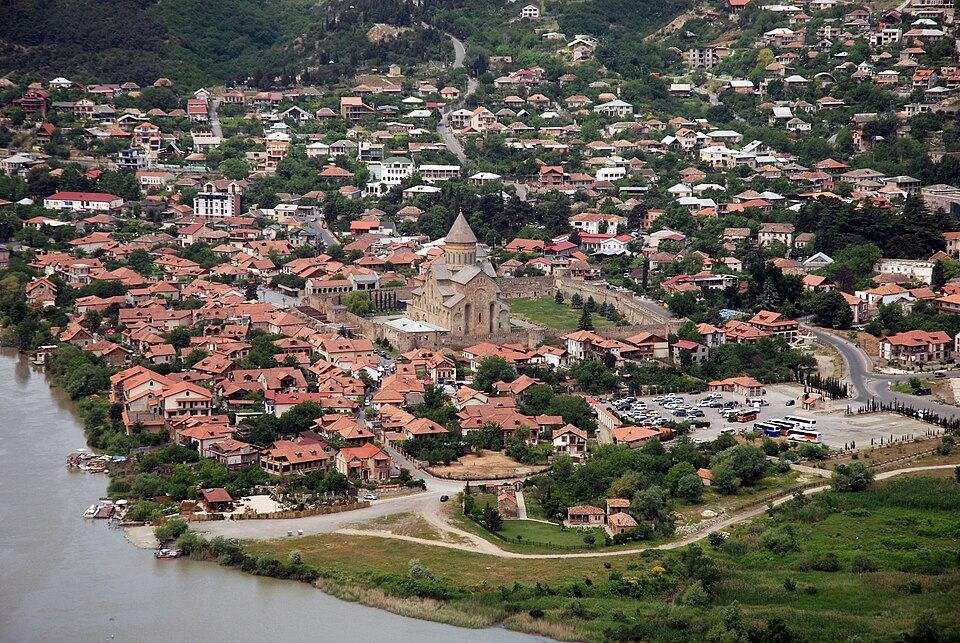 Photo: Jelger Groeneveld, CC BY 2.0
The churches of Georgia's ancient capital: Svetitskhoveli Cathedral, Jvari Monastery and Samtavro, masterpieces of medieval Caucasian architecture where the country's Christian history began.
Photo: Ihor Burliai, CC BY-SA 3.0Founded in 1106 by King David IV the Builder near Kutaisi, Gelati was a centre of medieval learning and keeps outstanding mosaics and frescoes. It was first listed together with Bagrati Cathedral, which was removed from the site in 2017.
Photo: Florian Pinel, CC BY-SA 3.0High mountain villages of medieval stone tower houses, built for defence, under the main Caucasus ridge. The Chazhashi quarter of Ushguli is the best-preserved example.
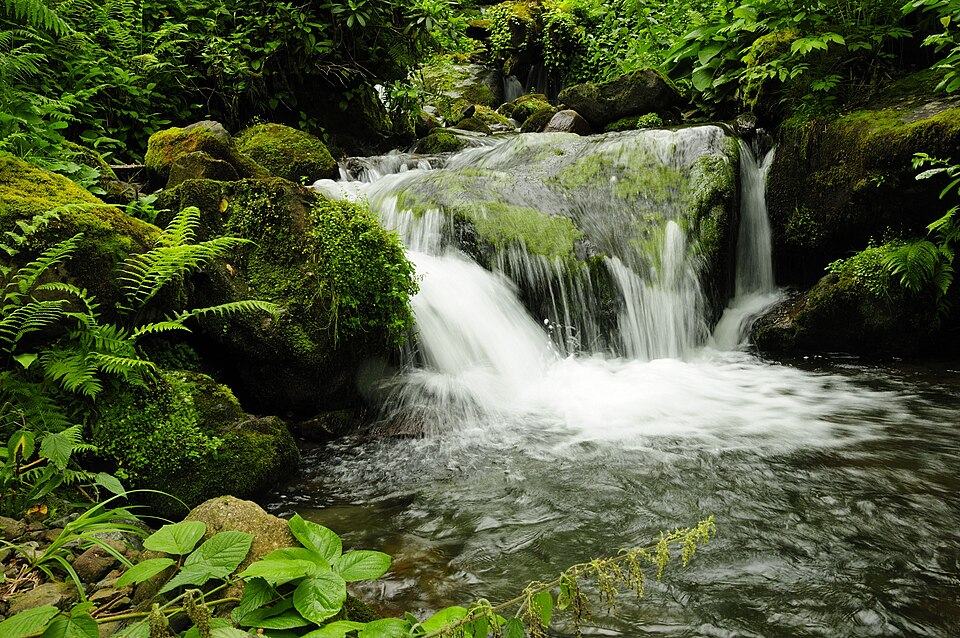 Photo: Philipp Weigell, CC BY 3.0
Seven protected areas along the eastern Black Sea, from the Kintrishi and Mtirala forests in Adjara to the coastal wetlands of Kolkheti. These temperate rainforests are relics of the warm, humid forests that were widespread across the Northern Hemisphere millions of years ago.
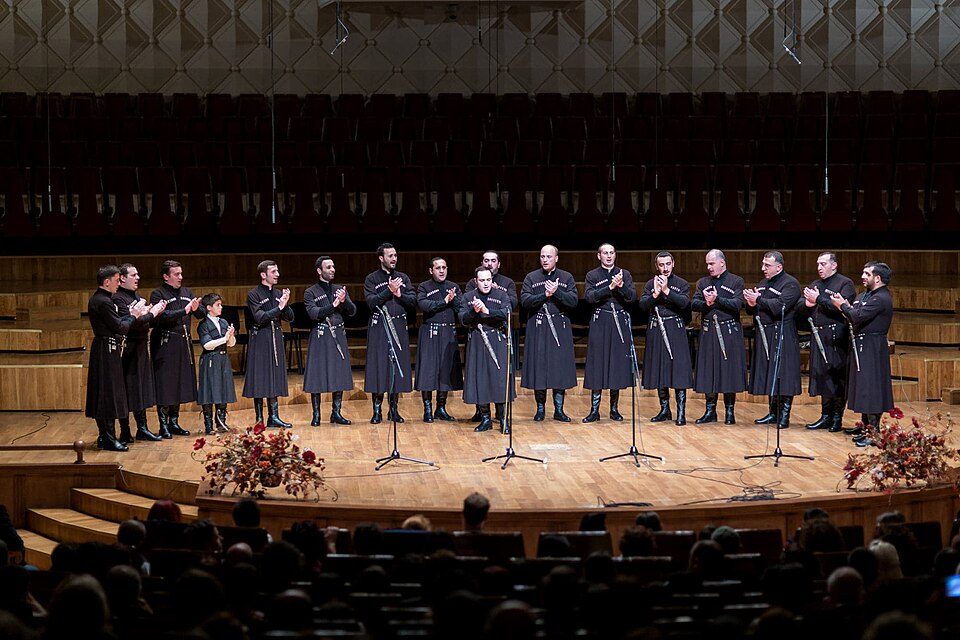 Photo: ქართული ფოლკლორი, CC BY-SA 4.0
Proclaimed a Masterpiece of the Oral and Intangible Heritage of Humanity in 2001 and inscribed on the Representative List in 2008. Songs for three voices, sung at feasts, in church and at work.
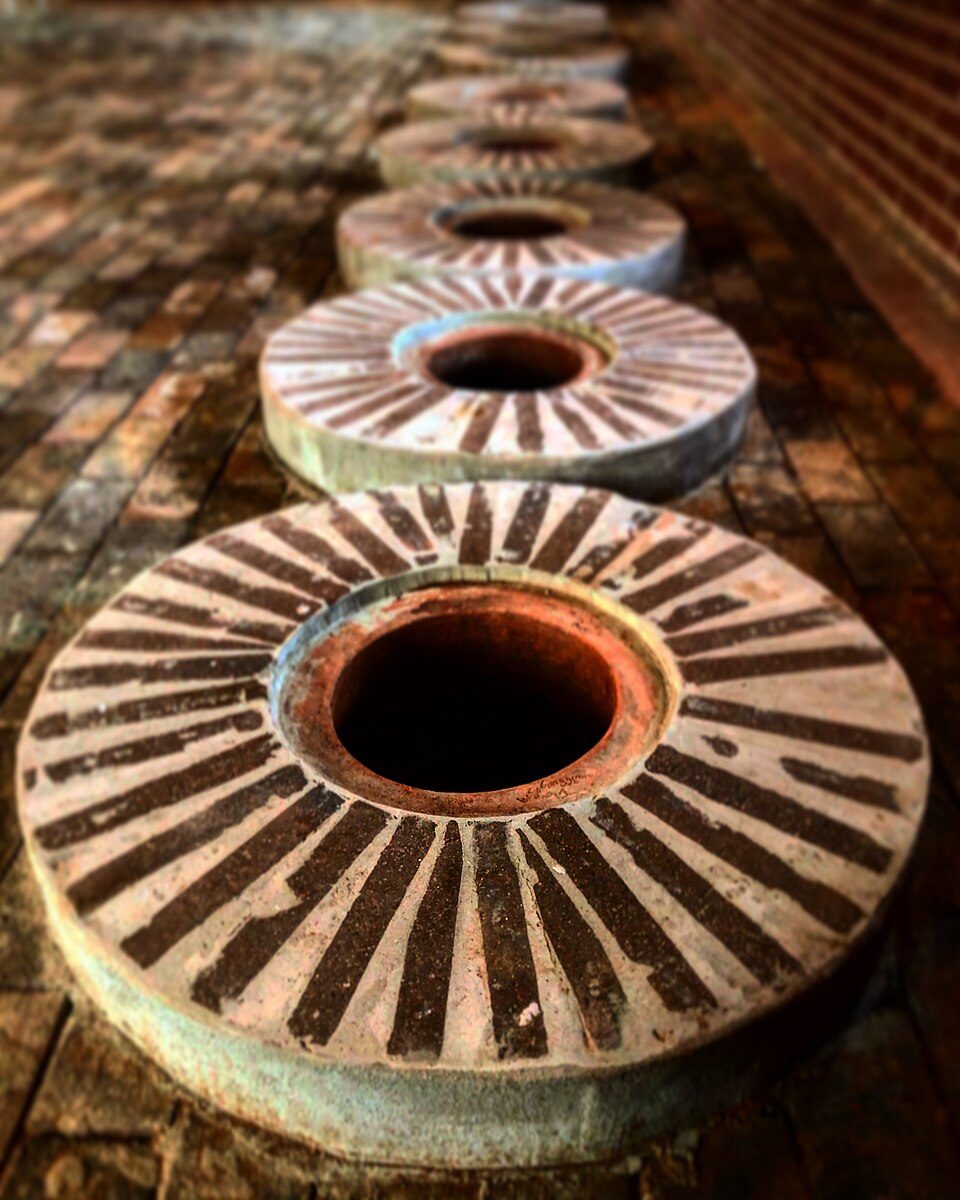 Photo: Mesashunawines, CC BY-SA 4.0
Grapes are crushed and fermented, often with skins and stems, in egg-shaped clay vessels buried in the ground, a method passed down in families and villages for thousands of years.
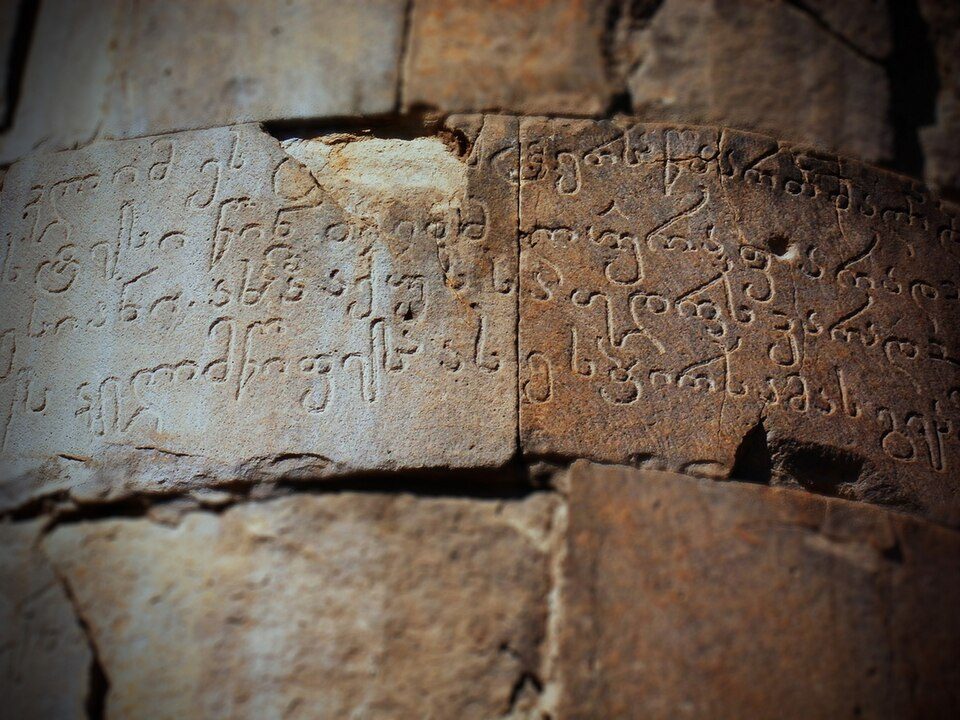 Photo: Irakli Chumburidze, CC BY-SA 2.0
Asomtavruli, Nuskhuri and Mkhedruli, the three scripts of the Georgian alphabet, which still coexist in religious texts, education and everyday life.
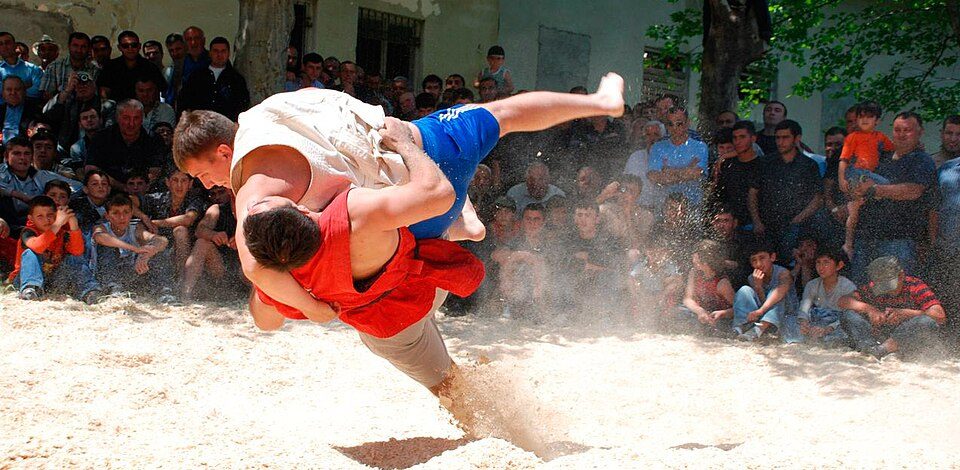 Photo: Itsdadu, CC BY-SA 4.0
Traditional Georgian folk wrestling, performed to music in a circle of spectators with its own rules, jackets and rituals, often at village festivals.
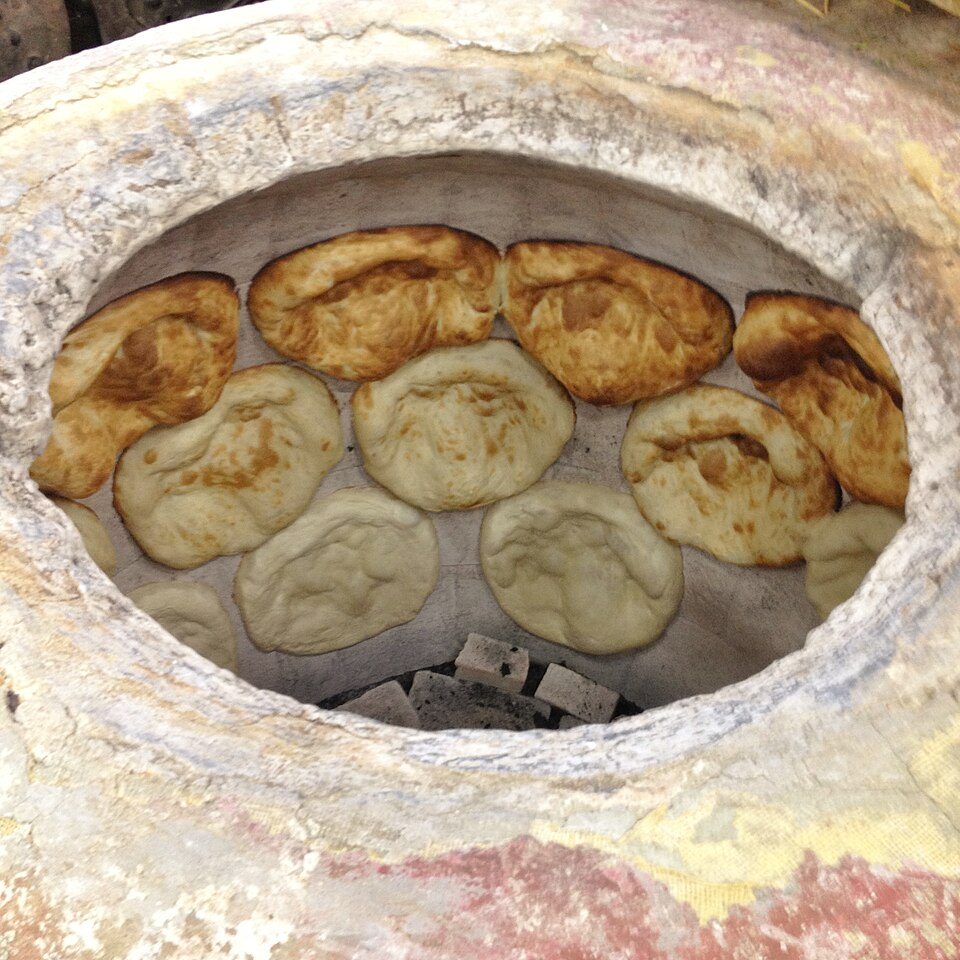 Photo: Ele.XCI, CC BY-SA 4.0
The knowledge, rituals and festivities linked to growing, harvesting and baking with wheat, including Georgia's ancient endemic varieties. Inscribed in 2025.
When to go: month by month
Temperatures are typical daytime highs in Tbilisi. Mountains are much cooler.
Cold and mostly dry; Tbilisi about 7°C by day and -1°C at night; deep snow in the mountains
Skiing, sulphur baths, Orthodox Christmas on 7 January
Cold; Tbilisi about 8°C / 0°C; the best snow cover of the year at ski resorts
Skiing in Gudauri, Bakuriani and Svaneti
Lowlands warming, Tbilisi about 13°C / 4°C; still winter above 1,500 m
City breaks, early blossom, late skiing
Mild with showers, Tbilisi about 19°C / 8°C; high passes still snowbound
Tbilisi, Kakheti, Orthodox Easter
Warm and green, Tbilisi about 24°C / 13°C; one of the wettest months
Sightseeing, wildflowers, lower hikes
Warm, Tbilisi about 29°C / 17°C; afternoon storms in the mountains
Kazbegi, first treks, start of beach season
Hot, Tbilisi about 32°C / 20°C; mild in the mountains
Svaneti and Tusheti treks, the Black Sea
Hot, Tbilisi about 32°C / 20°C; the busiest month
High-altitude hiking, Batumi, village festivals
Warm and settled, Tbilisi about 26°C / 16°C; cooler nights
Hiking, sea swimming, start of the grape harvest
Mild, Tbilisi about 20°C / 11°C; autumn colours and first snow on the high peaks
Rtveli wine harvest, Tbilisoba festival, photography
Cool, Tbilisi about 13°C / 5°C; quieter, with grey days
Young wine, city breaks, lower prices
Cold, Tbilisi about 8°C / 1°C; ski season opens
Festive Tbilisi, early-season skiing
Regions at a glance
From the wine villages of Kakheti to the tower houses of Svaneti and the subtropical coast of Adjara, each of Georgia's regions has its own food, landscape and traditions, and most are within a day's drive of Tbilisi.
Travelling to Georgia: FAQ
Is Georgia safe to visit?
Yes. Serious crime is uncommon, and the country is generally safe for solo, female and family travellers. Use the precautions you would in any city, keep clear of political protests in central Tbilisi, be careful on the roads, and stay well back from the lines that separate the rest of Georgia from occupied Abkhazia and the occupied Tskhinvali region (South Ossetia).
Do I need a visa for Georgia?
Not if you come from one of the 90-plus visa-free countries, a list that takes in the EU, UK, US, Canada and Australia; visitors from these places may stay up to a year. Nationals of most other countries can request an e-visa. The one firm rule for everyone, in force from 1 January 2026, is a health and accident insurance policy for the full length of the trip, with cover of 30,000 GEL or more.
Is Georgia expensive?
No. Approximate 2026 costs are 100 to 170 GEL ($40 to $65) per person per day on a budget, 250 to 450 GEL ($95 to $175) mid-range, and from about 600 GEL ($230) for comfort with a private driver. Tbilisi is the most expensive place; villages and family guesthouses cost less.
Is Georgia in Europe or Asia?
Both, depending on the definition. Georgia lies in the South Caucasus, where Europe and Asia meet, and a common convention draws the boundary along the Greater Caucasus, which runs through northern Georgia. Culturally and politically it looks to Europe: it has been a member of the Council of Europe since 1999 and was granted EU candidate status in December 2023.
What language is spoken in Georgia?
Georgian, a Kartvelian language with its own alphabet, unrelated to Russian or other European languages. Many older people also speak Russian, and English is common among younger people in Tbilisi, Batumi and tourist areas, where menus usually come in English too.
When is the best time to visit Georgia?
May, June, September and October are best for a mixed trip of cities, mountains and wine. July and August suit high-mountain trekking and the Black Sea coast. December to March is ski season, and late September and October bring the grape harvest to Kakheti.
Ready to see it for yourself?
Tell us your dates and interests. We'll send a route and a quote.
WhatsApp +995 598 74 74 54