Tbilisi City Break
A long weekend in the Georgian capital with a local guide: the Old Town and Narikala, a private sulphur bath, Sololaki's painted hallways, Fabrika, the funicular to Mtatsminda, a supper of Georgian wine and food, and a morning in ancient Mtskheta.
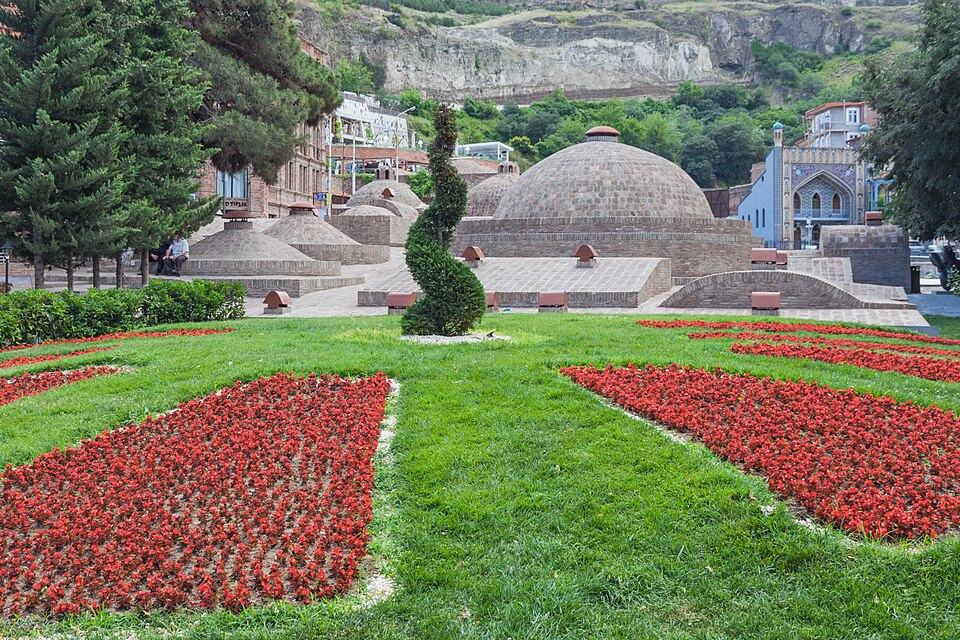 Abanotubani Sulphur BathsPhoto: Marcin Konsek, CC BY-SA 4.0
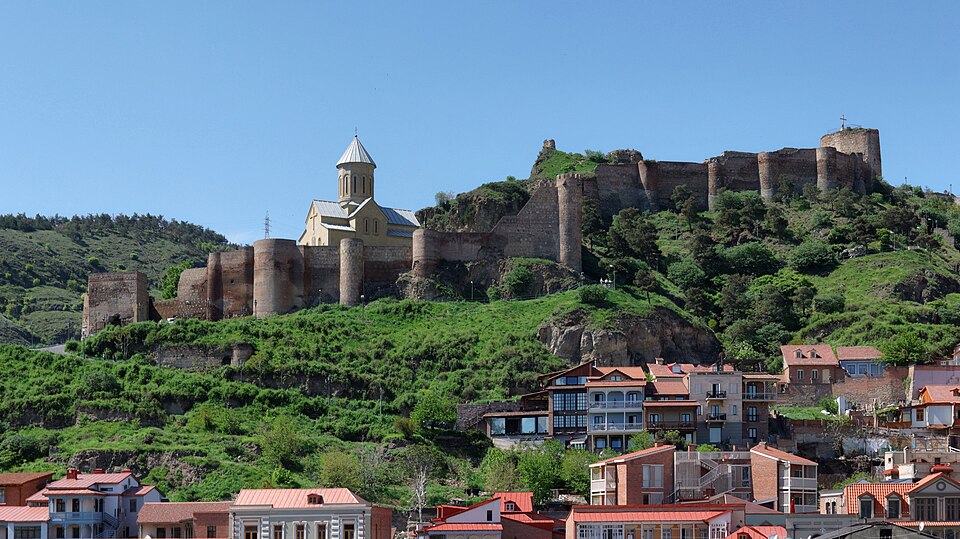
Tbilisi rewards a short stay better than most capitals, because almost everything worth seeing sits within a couple of kilometres of the Mtkvari river. This three-day break starts in the oldest streets below Narikala, where the city was founded beside hot springs in the 5th century, and ends with a morning in Mtskheta, the former royal seat 20 km upstream. In between you ride the old funicular to Mtatsminda, poke into the 19th-century entrance halls of Sololaki, spend an evening in Fabrika, and sit down to a long dinner built around qvevri wine and regional dishes.
Every day is on foot, so the pace is relaxed but you will climb a few steep lanes. Your guide walks with you during the day and leaves the evenings flexible, except for the food and wine supper on day two. You sleep in a small hotel in the old centre for two nights, three if you arrive the evening before. The tour runs all year. Spring and autumn are the most comfortable for walking; in July and August we start early and use the hot middle of the day for the museum or the baths.
Highlights
- A private room in one of the domed sulphur bathhouses of Abanotubani
- Narikala Fortress by cable car, then down past the Leghvtakhevi waterfall
- Painted stairwells and courtyards in the merchant houses of Sololaki
- The funicular up Mtatsminda and the writers' pantheon on the way
- An evening of qvevri wine and regional plates with a local host
- Jvari and Svetitskhoveli in Mtskheta, a UNESCO World Heritage Site
Tour facts
Rustaveli Avenue, Fabrika, the Mtatsminda top station and Svetitskhoveli are reachable by car or with little walking. The old town lanes, Narikala's walls and the baths have steps and steep cobbles, so we plan routes by car and taxi for travellers with reduced mobility.
Places on this tour
17 places · tap any place to read its guide
- 1Old Town, Narikala and an afternoon in the baths
- 2Sololaki, Mtatsminda, Fabrika and a supper of wine
- 3A morning in Mtskheta, then departure
Day by day
01Old Town, Narikala and an afternoon in the bathsOvernight: Tbilisi
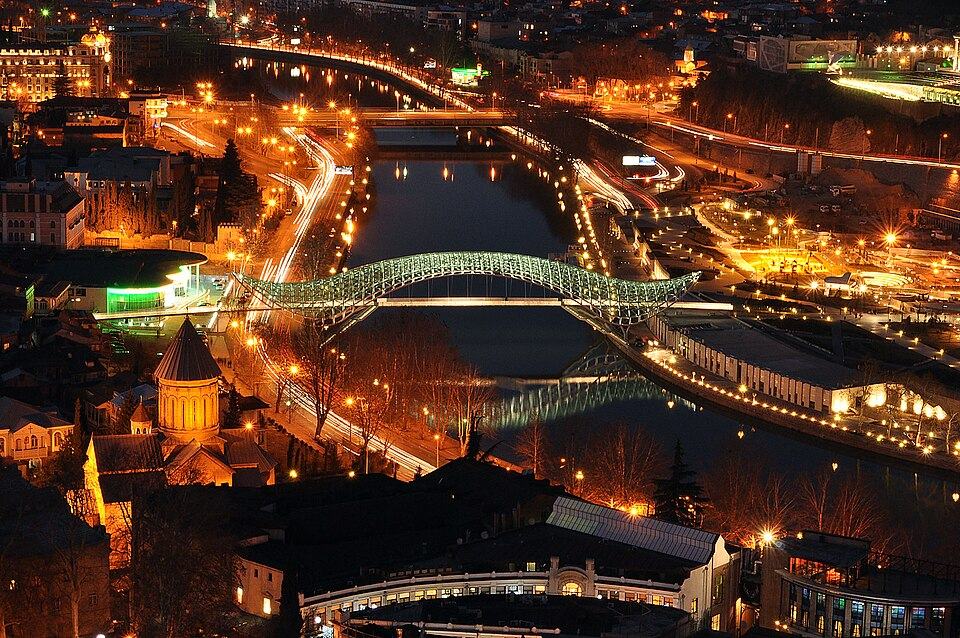
Your guide meets you at the hotel at 10 am and starts by the brick domes of Abanotubani, the bath district that gave Tbilisi its name, from the Georgian word for warm. Climb the lane behind the baths to the Leghvtakhevi gorge and its small waterfall, then take the cable car from Rike Park up to Narikala, a fortress first built in the 4th century. From the walls you see Mother of Georgia, the silver aluminium figure holding a sword and a bowl of wine. Walk back down through Kala to Sioni Cathedral and the Bridge of Peace for a late lunch. Mid-afternoon you have a private room booked in a sulphur bathhouse, with hot pools and an optional kisi scrub from the attendant. The evening is yours.
02Sololaki, Mtatsminda, Fabrika and a supper of wineOvernight: Tbilisi
Begin in Sololaki, the quarter where 19th-century merchants built houses with grand stairwells, painted ceilings and courtyards hung with laundry. Your guide knows which doors are usually open. Continue along Rustaveli Avenue past the parliament and the opera house, then ride the funicular, running since 1905, to the top of Mtatsminda. On the way up, stop at the pantheon where the writer Ilia Chavchavadze and the poet Nikoloz Baratashvili are buried. After lunch with the city below you, cross the river to Fabrika, a Soviet-era sewing factory turned into a hostel, cafes and studios with murals across every wall. At 7 pm you join a local host for supper: four or five qvevri wines poured alongside dishes from different regions, perhaps Adjarian khachapuri, Megrelian kharcho and badrijani with walnuts.
03A morning in Mtskheta, then departure
Check out after breakfast and drive about 30 minutes north to Mtskheta. Jvari Monastery comes first: built around 600 AD on the hilltop where St Nino is said to have raised a wooden cross, it looks down on the meeting of the Mtkvari and Aragvi rivers. Down in the town you walk to Svetitskhoveli Cathedral, rebuilt in the 11th century, with its frescoes and the tombs of Georgian kings. Your guide explains the story of Christ's robe, believed to lie beneath the church. There is time for a quick coffee or a churchkhela from the stalls on the way back to the car. We take you to Tbilisi airport or back to the city centre by early afternoon, so an evening flight works well.
Prices
Price per person for a private tour, by the size of your group. Sample prices
| Group size | Per person | Whole group |
|---|---|---|
| Solo traveller | $990 | $990 |
| 2 travellers | $600 | $1,200 |
| 3-4 travellers | $480 | from $1,440 |
| 5-8 travellers | $395 | from $1,975 |
| 9-15 travellers | $330 | from $2,970 |
Room and children
- Single room supplement: $75
- Children under 6 free (sharing a bed); ages 6-11 pay 70% of the adult price.
- Prices change with hotel level and season; your quote is final.
Popular add-ons
- Tbilisi airport transfer (car, 1-3 people)$30
- Extra night in Tbilisi with breakfast$100
- Supra dinner with folk music$50
What's included
- Two nights in a central boutique hotel with breakfast
- Your own guide in your language on all three days
- Private car and driver for the Mtskheta morning and the final transfer
- Cable car to Narikala and the Mtatsminda funicular
- One hour in a private sulphur bath room
- Evening wine and food supper with a local host
- Lunch on days one and two
- Flights to and from Tbilisi
- Health insurance for your trip, which visitors to Georgia must carry from 1 January 2026
- Arrival transfer if you land before day one (we can add it)
- A kisi scrub or massage at the baths
- Drinks outside the wine supper
- Tips for your guide
Good to know
Who it's for
- Short-break travellers with a long weekend who want the capital in depth rather than a dash across the country
- Food and wine lovers who would enjoy a guided supper of qvevri wines and regional dishes
- Architecture fans keen on Sololaki's painted entrance halls and the old balconies of Kala
- Travellers who want the sulphur baths explained and booked for them
If you have a week and want mountains and vineyards too, our Tbilisi, Mountains & Wine tour adds Kazbegi and Kakheti to the city.
What to bring
- Comfortable shoes with grip for steep, worn cobbles in Kala and Sololaki
- Swimwear and flip-flops if you prefer them in the private bath room
- Covered shoulders and knees, and a headscarf for women, at Sioni, Jvari and Svetitskhoveli
- A light jacket for the windy fortress walls and Mtatsminda in the evening
- A refillable water bottle for hot summer afternoons on foot
- People with heart conditions, high blood pressure or pregnancy should check with a doctor before using hot sulphur pools.
- Old Tbilisi pavements are uneven and often steep; the cable car and funicular take out the two biggest climbs.
- Some Sololaki entrance halls are private homes: we enter only where residents allow it and keep voices low.
- In July and August we begin earlier to avoid the afternoon heat, which can pass 35 °C.
Guest reviews
Questions about this tour
Is three days enough for Tbilisi?
It is enough to see the core of the city without rushing and to get a feel for its food and wine. If you have a fourth day, a trip to Kazbegi in the mountains or to the Kakheti vineyards makes a good addition, and we can bolt either on.
What happens at the sulphur baths?
You book a private room by the hour. Most have a hot pool fed by the sulphur spring, a cold plunge and a changing area. The water smells of eggs at first and is around 38–40 °C. An attendant can give you a kisi, a vigorous scrub with a rough mitt, for an extra charge. Swimwear is optional in a private room.
Can the wine supper cater for non-drinkers or vegetarians?
Yes. Georgian cooking has many meat-free dishes, from pkhali and lobio to badrijani, and during church fasts many locals eat vegan. Non-drinkers can try local lemonades, fruit compotes and Borjomi mineral water instead of wine. Tell us when you book.
How hilly is the walking?
Old Tbilisi is built on slopes, and the lanes around Narikala and Sololaki are steep in places, with uneven paving. We use the cable car and funicular for the two big climbs, so the walking itself is easy if you take your time. Comfortable shoes with grip are the main thing.
Can we visit Mtskheta on the first day instead?
Yes, the order is flexible. Some guests prefer to do Mtskheta first and finish with the baths before an evening flight. We plan the days around your arrival and departure times.