Armaztsikhe-Bagineti
Excavated citadel of the ancient kings of Iberia on Bagineti hill, across the Mtkvari from Mtskheta.
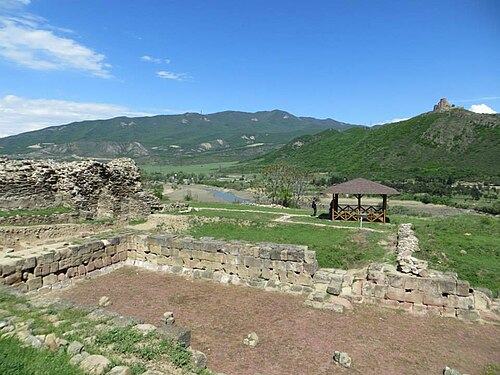 Armaztsikhe-BaginetiPhoto: AFCP, Public domain
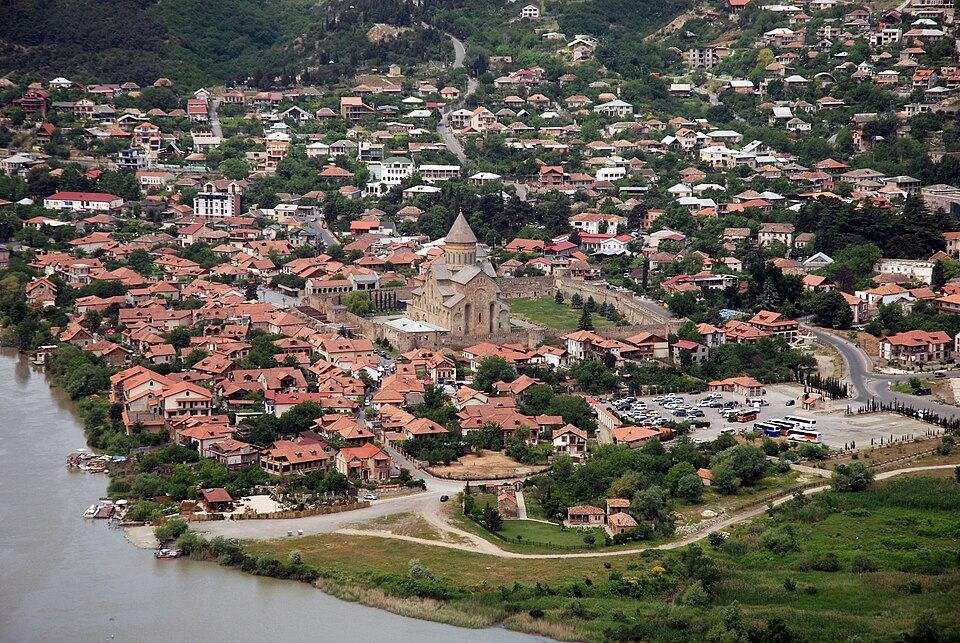
Armaztsikhe, the fortress of Armazi, is the archaeological site of the royal citadel of ancient Iberia, the kingdom that ruled eastern Georgia in the centuries around the birth of Christ. It stands on Bagineti hill on the right bank of the Mtkvari, directly across the river from Mtskheta, and takes its name from Armazi, the chief god of pre-Christian Kartli. Excavations since the late 1930s have uncovered stretches of defensive wall, the foundations of a palace and other buildings, a bath house and rich graves, showing that this hill was the seat of power while Mtskheta grew below.
The best-known find is a gravestone inscribed in both Greek and Aramaic for Serapita, daughter of a high Iberian official, now kept in the National Museum in Tbilisi. On the ground the remains are low and partly overgrown, so the site suits people interested in archaeology, or anyone after a quiet view back across the river to Svetitskhoveli and Jvari. Signs are few and access can change, so ask locally or come with a guide.
History
Georgian chronicles credit the early Iberian kings with fortifying Armazi, and archaeology points to a citadel here from at least the 3rd century BC. Greek and Roman writers knew it as Harmozike. It served as the royal acropolis of Iberia, with Mtskheta as the town across the river, and a necropolis of the ruling families lay in the gorge nearby. Its importance faded after the conversion to Christianity in the 4th century and the later move of the capital to Tbilisi.
What to see and do
- Walk among the excavated walls on Bagineti hill
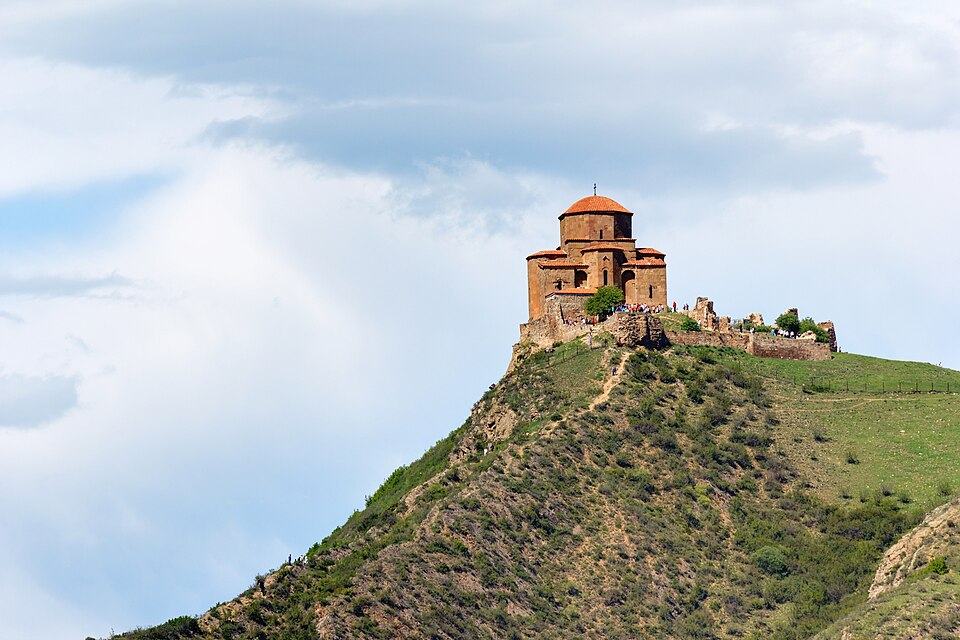
- Look across the Mtkvari to Svetitskhoveli and Jvari
- Learn about pre-Christian Iberia and the god Armazi
- See finds from the site at the National Museum in Tbilisi
How to visit
Getting there
The site lies on the south side of the Mtkvari opposite Mtskheta, about 20 km from central Tbilisi and roughly 10 minutes by car from the centre of Mtskheta.
When to go
Spring and autumn. Plan 45 minutes–1 hour here.
- Wear sturdy shoes; paths are rough and partly overgrown.
- Bring water and sun protection, as there is no shade or cafe.
- Check access locally or with a guide before you go.
- Combine with Mtskheta and Jvari on the same half day.
Armaztsikhe-Bagineti: FAQ
What is Armaztsikhe?
Armaztsikhe is the ruined citadel of the ancient kings of Iberia on Bagineti hill, across the Mtkvari from Mtskheta. It is named after Armazi, the main god of pre-Christian Kartli.
Is Armaztsikhe worth visiting?
It is worth it if you enjoy archaeology. The remains are low ruins, but the history is important and the view across to Mtskheta is good.
Nearby places
Straight-line distance from Armaztsikhe-Bagineti.